National News
Astronomers spot skyscraper-sized asteroid on fast orbit

NEWNow you can take heed to Fox Information articles!
Astronomers have reportedly found a skyscraper-sized asteroid transferring via our photo voltaic system at a near-record tempo.
The asteroid, named 2025 SC79, orbits the solar as soon as each 128 days, making it the second-fastest identified asteroid to orbit the solar.
It was first noticed by Carnegie Science astronomer Scott S. Sheppard on September 27, based on an announcement from Carnegie Science.
UFO MANIA SEIZES SMALL TOWN AS MYSTERIOUS GLOWING OBJECT SIGHTING GOES VIRAL

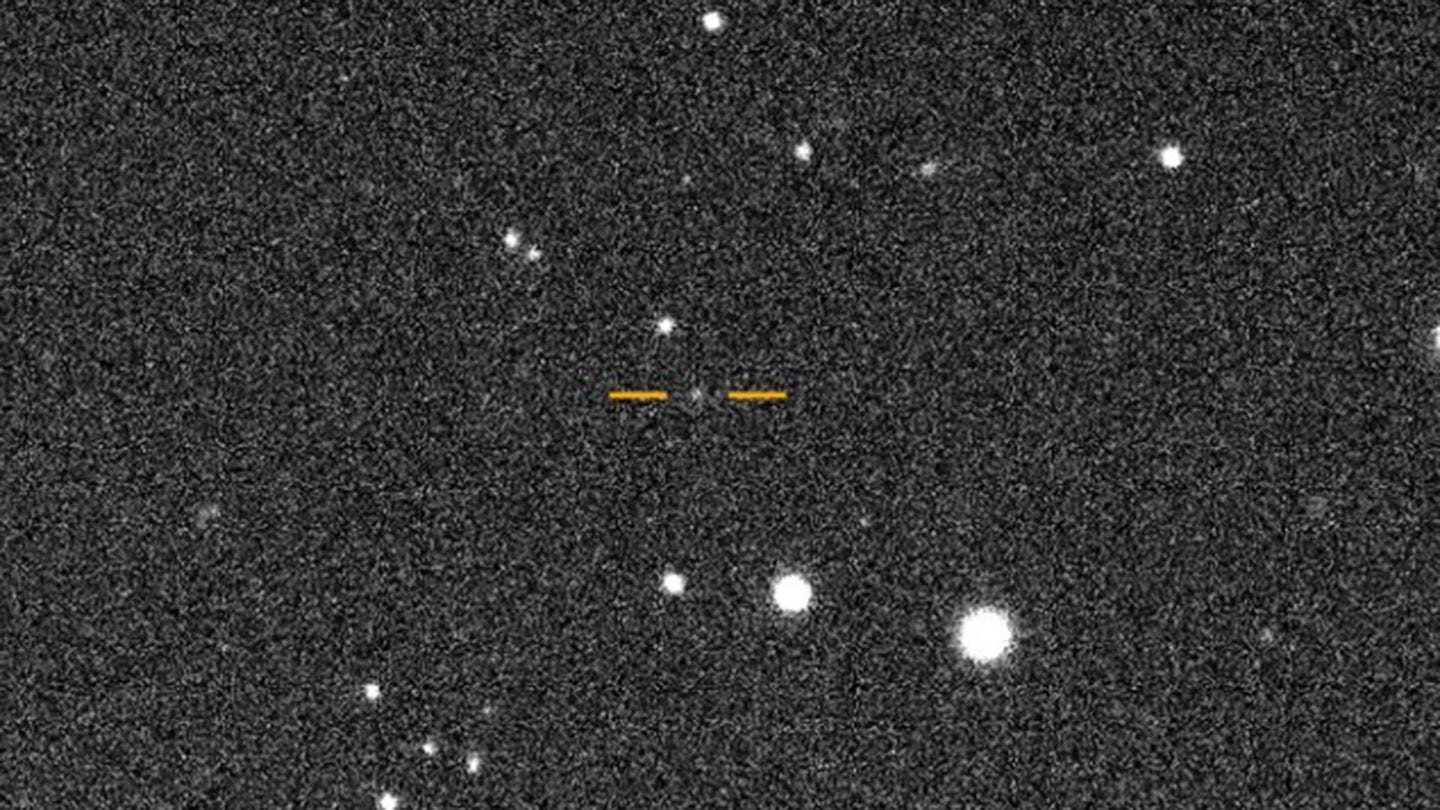
In September, a skyscraper-sized asteroid named 2025 SC79 was found hidden within the solar’s glare. (Carnegie Science)
The asteroid is the second identified object to orbit inside Venus, the assertion mentioned. Throughout its 128-day journey across the solar, it crosses the orbit of Mercury.
“Lots of the photo voltaic system’s asteroids inhabit one in every of two belts of area rocks, however disruptions can push objects into narrower orbits, the place they are often more durable to identify,” Sheppard mentioned. “Understanding how they arrived at these areas might help us defend our planet and in addition be taught in regards to the historical past of the photo voltaic system.”
The celestial physique is now transferring behind the solar and will likely be invisible to telescopes for a number of months.
HARVARD PHYSICIST SAYS MYSTERIOUS INTERSTELLAR OBJECT MAY BE A NUCLEAR SPACESHIP
Sheppard’s seek for so-called “twilight” asteroids will assist determine objects that would pose a threat of crashing into Earth, the assertion mentioned.
The work, funded partly by NASA, makes use of the Darkish Vitality Digital camera on the Nationwide Science Basis’s Blanco 4-meter telescope to look the solar’s glare for “planet killer” asteroids that would pose a hazard to Earth.
The NSF’s Gemini Telescope and Carnegie Science’s Magellan Telescopes have been used to verify the 2025 sighting of SC79, Carnegie Science mentioned.
The quickest identified asteroid was additionally found by Sheppard, who research objects within the photo voltaic system, together with moons, dwarf planets and asteroids. and his colleagues in 2021.
CLICK HERE TO DOWNLOAD THE FOX NEWS APP
It takes 133 days to revolve across the solar.