Michigan
Criminal probe targets toxic dirt; Detroit could face $8M cleanup


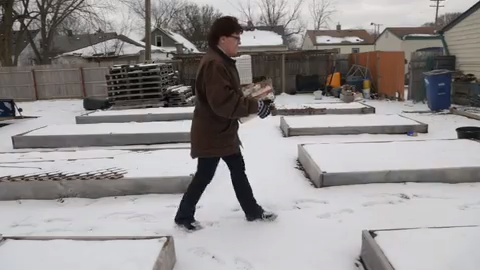


The Impression of Devastating House Removals in Detroit
Detroiters are speaking in regards to the influence on their neighborhood when blighted houses are eliminated.
Mandi Wright, Detroit Free Press
Detroit police and state environmental regulators are individually investigating two corporations believed to have collectively stuffed lots of of Detroit demolition websites with poisonous waste, threatening to price town tens of millions in cleanup prices, Mayor Mike Duggan introduced at a Dec. 22 information convention simply over every week into his job.
An “intensive” and ongoing legal investigation into doable fraud by Detroit-based Gayanga Co. has recognized 49 demolition websites the place the contractor could have used poisonous dust, along with the 58 town mentioned had been already contaminated, Detroit Police Division Deputy Chief Kari Sloan mentioned. Duggan mentioned he requested the police investigation in September after the Detroit inspector basic’s workplace found the contractor could have intentionally used fill from unapproved sources.
As well as, the Michigan Division of Surroundings, Nice Lakes and Power says it’s working with Detroit officers to analyze the operations of Oakland County-based Iron Horse of Michigan Inc. to judge after Duggan mentioned town found it was bringing doubtlessly poisonous dust to Gayanga and three different contractors answerable for 424 demolitions.
The town is testing the Gayanga and Iron Horse websites of concern and plans to exchange dust in any respect contaminated websites. To this point, dust has been faraway from at the very least 50 places and town will ultimately sue the contractors in an effort to recoup prices, Duggan mentioned, including that he has spoken with newly elected Mayor Mary Sheffield in regards to the situation. A consultant for Sheffield’s transition didn’t return a request for remark Monday.
Eradicating and changing dust on the website the place a single house is demolished prices a mean of $18,000, Duggan mentioned — nearly the price of the demolition itself. Changing the dust at 400 websites may price $8 million, however exams carried out at dozens of web sites up to now present solely about 30% are contaminated above acceptable ranges for the area, Duggan mentioned.
Greater than 400 places related to the 2 corporations have but to be examined, a course of anticipated to be accomplished by March, Duggan mentioned.
“Extended human contact is a well being threat,” Duggan mentioned of the necessity to exchange the soil, including that future building prices on the cleared websites “could be way more costly … if contaminated backfill is left behind.”
“I am making an attempt to set the stage in order that we will see houses reappear in these neighborhoods in essentially the most cost-effective means doable, so we’ll have a look at each single case the place there’s a downside,” Duggan mentioned.
Gayanga was initially suspended from Detroit’s demolition program in September after the Detroit Workplace of the Inspector Basic alleged it extracted contaminated dust from the redevelopment of the previous Northland Mall website in Southfield. The town council confirmed the suspension unanimously on November 19.
Whereas the corporate used contaminated dust from Iron Horse at some places, poisonous backfill from elsewhere was discovered at 24 demolition websites in Gayanga, Duggan mentioned.
Brian McKinney’s demolition firm has obtained tens of tens of millions of {dollars} in metropolis demolition contracts since a 2018 effort by Duggan, Sheffield and different metropolis leaders to make sure better illustration of minorities and Detroit-based companies in this system. Sheffield and McKinney dated in 2019, when she voted as a metropolis council member to approve tens of millions in contracts for him.
In an announcement on December 22, Gayanga spokesperson Shaun Wilson mentioned: “We have now been fully clear and dedicated to all features of the investigation and it’s price noting that Gayanga has solely used publicly accepted sources for all websites in query. If an worker is definitely discovered to be deviating from our outlined processes and procedures for private achieve, we count on her or him to be held accountable, similar to every other contractor. Moreover, the one purpose Iron Horse has been suspended and investigated NOW is as a result of our clear knowledge point out that almost all of the dust in query got here from them… and we’ve got vigorously defended that place.”
Iron Horse is owned by Rodney Burrell, a former Northville trucking firm proprietor who pleaded responsible in 2010 to submitting an inflated bid to assist former Mayor Kwame Kilpatrick’s pal Bobby Ferguson get a contract. Burrell’s Iron Horse was accepted by town because the dust provider for the 2023 demolition program and was suspended Nov. 3 after preliminary testing confirmed contamination at quite a few places.
The Iron Horse sand and gravel pit, the place the dust comes from, is situated in Milford Township and is named a “native” pit with undisturbed soil, usually a great supply for fill, Duggan mentioned.
After receiving stories of doable contamination this summer season, town employed environmental consulting agency Mannik and Smith Group to start testing the positioning. The corporate visited the positioning on December 2 and located not solely the native pit, but additionally dust being introduced in. Duggan mentioned Iron Horse prevented the corporate from conducting soil testing and town — which has no jurisdiction in Oakland County — subsequently filed a grievance with EGLE.
“This can be a disturbing final result. We have now by no means seen proof of soil from a local nicely take a look at at some of these elevated contaminated ranges,” Duggan mentioned. “We’re extraordinarily suspicious that they aren’t really promoting native soil and gravel.”
Iron Horse proprietor Burrell, reached by telephone and requested about Duggan’s statements, mentioned Monday, “I do not know something about it. I’ve by no means needed to take care of filth earlier than.”
Burrell has beforehand denied claims that the dust he sells to demolition contractors is contaminated, and that’s telling Crain’s Detroit in September: “That is a bunch of bulls —. They arrive out yearly and have a look at my stuff, take photos and ship letters. … They will come and take a look at mine at any time.”
In an announcement, an EGLE spokesperson mentioned town has shared its Iron Horse findings with the company.
“We proceed to assemble extra particulars in regards to the particular parcels in Detroit the place this fill was used to evaluate any potential dangers,” mentioned spokesman Josef Stephens. “EGLE’s subsequent step is to judge potential dangers to public well being primarily based on the character and placement of the fill materials. EGLE will proceed to work with the Metropolis to find out applicable actions, together with potential remediation or enforcement if contamination is confirmed.”
Duggan mentioned the soil turns into a well being hazard when it’s dug up — “if you happen to had been to dig by means of the bottom of the topsoil and spend loads of time digging into the soil.”
The police investigation in Detroit’s Gayanga, in the meantime, included the execution of 13 search warrants, the seizure and examination of a laptop computer and several other cellphones, the seizure of greater than 100 packing containers containing detailed employment information and interviews with dozens of staff affiliated with the corporate, Sloan mentioned. Duggan mentioned the corporate allegedly misrepresented the supply of the fill soil in paperwork filed with town. The investigation will in the end be turned over to the Wayne County Prosecutor’s Workplace for doable expenses.
Poisonous dust has been a recurring downside within the demolition program that has destroyed about 27,000 deserted and blighted houses in Detroit since Duggan took workplace in 2014, prompting the implementation of extra security measures.
All public cash spent changing poisonous dust at 154 websites demolished earlier than 2020 — when this system was largely federally funded — was recouped by means of lawsuits and federal authorities motion, Duggan mentioned. Since 2021, Detroit taxpayers have been answerable for the price of demolition by means of a voter-approved $250 million bond generally known as Proposal N.
Duggan mentioned town has by no means earlier than handled a state of affairs the place an alleged provider of native dust has distributed contaminants to quite a few contractors, and mentioned a $15 million reserve fund is in place in case town is unable to recoup cleanup prices. Nonetheless, these reserves also needs to cowl different points with the demolition program, corresponding to damaged sidewalks and property injury.
“I wish to be certain that I go away city with out important long-term monetary threat,” Duggan mentioned.
Additionally Monday, Duggan praised town’s demolition program as a “outstanding” achievement, saying that when he took workplace 12 years in the past, Detroit had 47,000 deserted houses. Right now, he mentioned, the Detroit Land Financial institution Authority owns 942 houses, with fewer than 250 but to be demolished beneath Proposition N.
“Now there are nonetheless privately owned deserted houses, and town must be vigilant in enforcement,” Duggan mentioned. However “the times of claiming ‘that deserted land financial institution home is tearing down my block’ are over. … The 47,000 deserted houses that blighted this metropolis have been resolved.”
Violet Ikonomova is an investigative journalist on the Free Press specializing in authorities and police accountability in Detroit. Contact her at vikonomova@freepress.com.