National News
Cube-shaped skull, 1,400 years old, is found in Mexico archaeological discovery

NEWNow you can hearken to Fox Information articles!
Archaeologists not too long ago found a shocking 1,400-year-old cranium in an historic village in Mexico – uncommon for each its flat high and cube-like form.
The Mexican Nationwide Institute of Anthropology and Historical past (INAH) introduced the discover. Officers mentioned the cranium was discovered within the Balcón de Montezuma archaeological zone, within the northern Huasteca area of Tamaulipas.
The cranium belonged to a person who lived between 400 and 900 AD. He was over 40 years previous when he died, officers mentioned.
FACES OF ANCIENT MUMS, HIDDEN FOR CENTURIES, FINALLY REVEALED THROUGH DIGITAL RECONSTRUCTIONS
The person had a peculiar, upright cranium, with the back and front of the top intentionally flattened.
The cranium additionally has an unusually flat high, giving it a cube-like form, just like the uncommon tabular superior form.

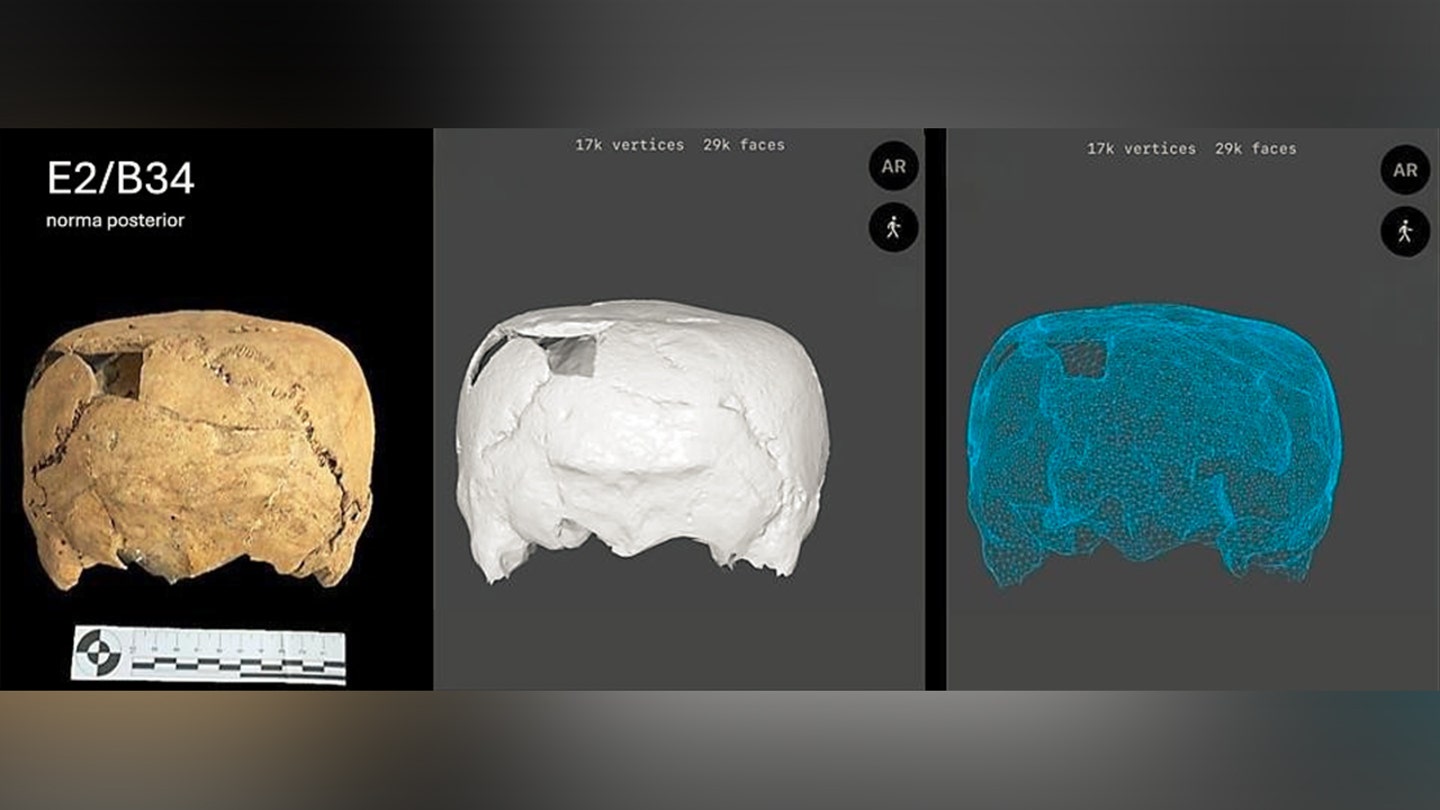
Archaeologists in Mexico have introduced the invention of a 1,400-year-old cranium that reveals uncommon types of deliberate cranium deformation. (Instituto Nacional de Antropologie e Historia)
“Consequently, not solely was intentional cranium deformation recognized for the primary time at some of these websites, but in addition a variant of cranium modeling not beforehand reported on this area of Central America,” the INAH press launch mentioned.
In a translated written assertion to Fox Information Digital, INAH researchers mentioned they consider the cranium might have had a that means associated to identification and standing.
“Not all people on the website (for whom we have now full skeletons) exhibit some of these cultural modifications,” the researchers mentioned.
CLICK HERE TO SIGN UP FOR OUR LIFESTYLE NEWSLETTER
“In different phrases, this particular person clearly stood out from others, which gave him a differentiated place.”
The person’s place was not ‘essentially of excessive social standing’ – and the consultants recommended he might have had a shaman-like function inside the group.
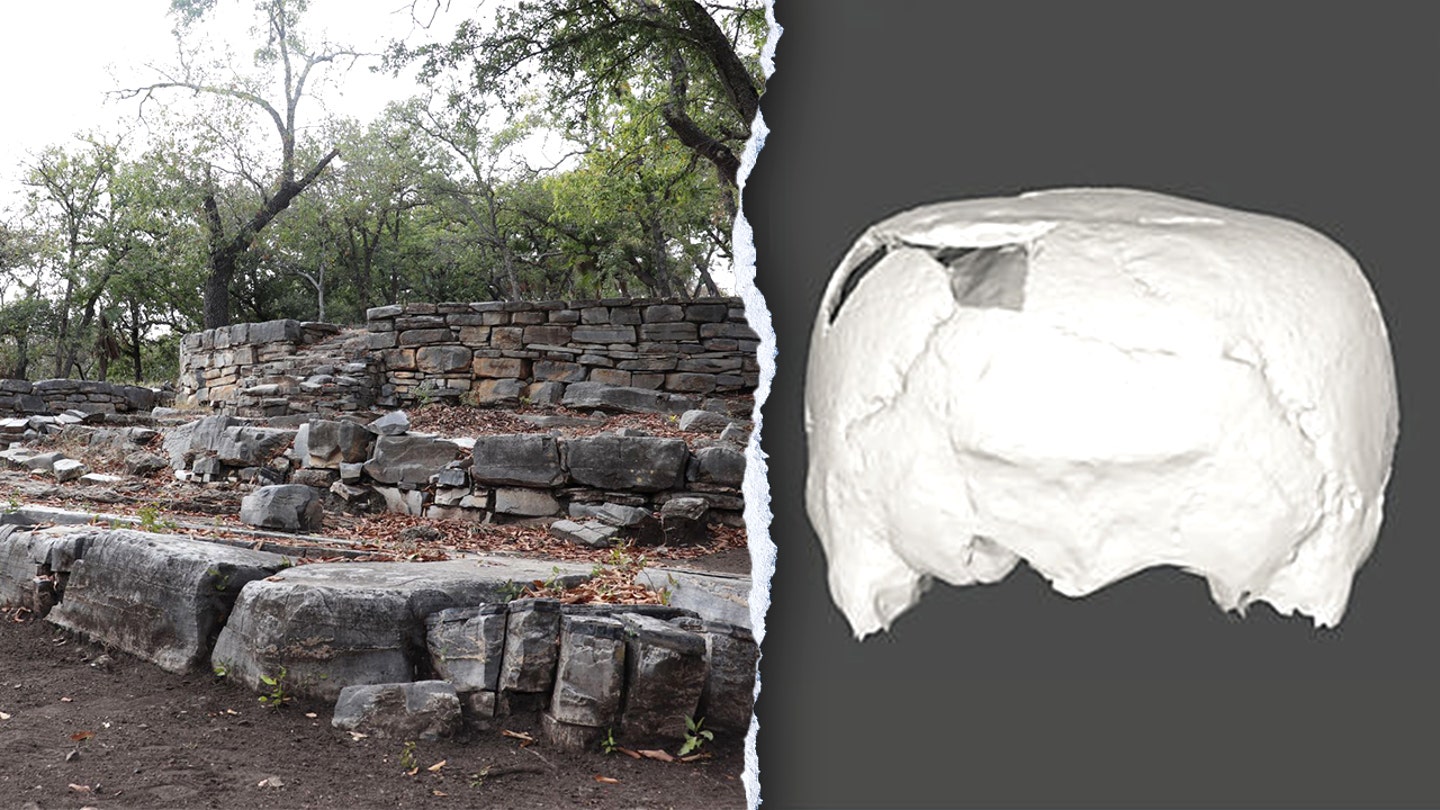
The cranium was uncovered within the Balcón de Montezuma archaeological zone within the northern Huasteca area of Tamaulipas. (Instituto Nacional de Antropologie e Historia)
Though cranial deformations weren’t extraordinary in Mesoamerica, researchers highlighted that this kind is much less widespread than different sorts within the area – and unusually combines each upright and tabular superior kinds.
CLICK HERE FOR MORE LIFESTYLE STORIES
“The variations between them lie within the lateral projection angle between the frontal, occipital and/or coronal bones,” the group mentioned.
The group additionally mentioned the grave was uncommon due to the small spherical shell beads, which served as private decorations.
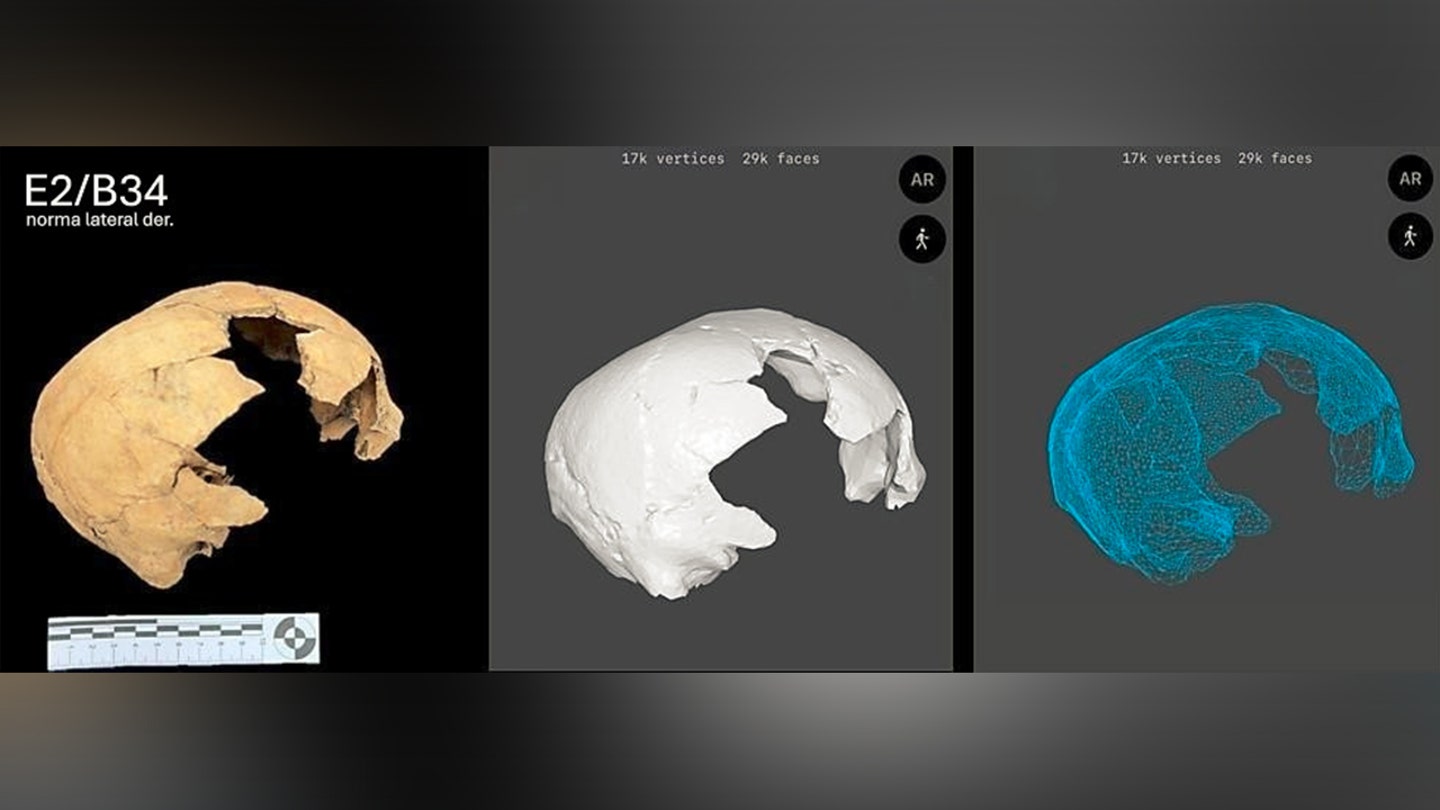
Deliberate cranium deformation was utilized in components of Central America, however hardly ever on this particular mixture. (Instituto Nacional de Antropologie e Historia)
“This new discovery supplies extremely related knowledge on the character of intercultural relations within the Huasteca area – particularly with the North and the Sierra Madre Oriental of Mexico,” the researchers added.
TEST YOURSELF WITH OUR LATEST LIFESTYLE QUIZ
“It not solely reveals the excessive diploma of ethnic variety, but in addition supplies perception into the bodily traits of the residents.”
The invention is only one of many archaeological finds found in 2025.
Archaeologists (not pictured) mentioned the grave differed from others discovered within the historic village. (iStock)
In El Salvador, excavators discovered ‘creepy’ dolls on the high of a pyramid that was greater than 2,400 years previous.
CLICK HERE TO DOWNLOAD THE FOX NEWS APP
This summer time, a Texas couple unearthed the traditional tomb of a legendary king in Caracol, Belize, a significant Mayan metropolis based within the 300s AD.