
Michigan
Livonia man asks U.S. Supreme Court to toss terrorist charge


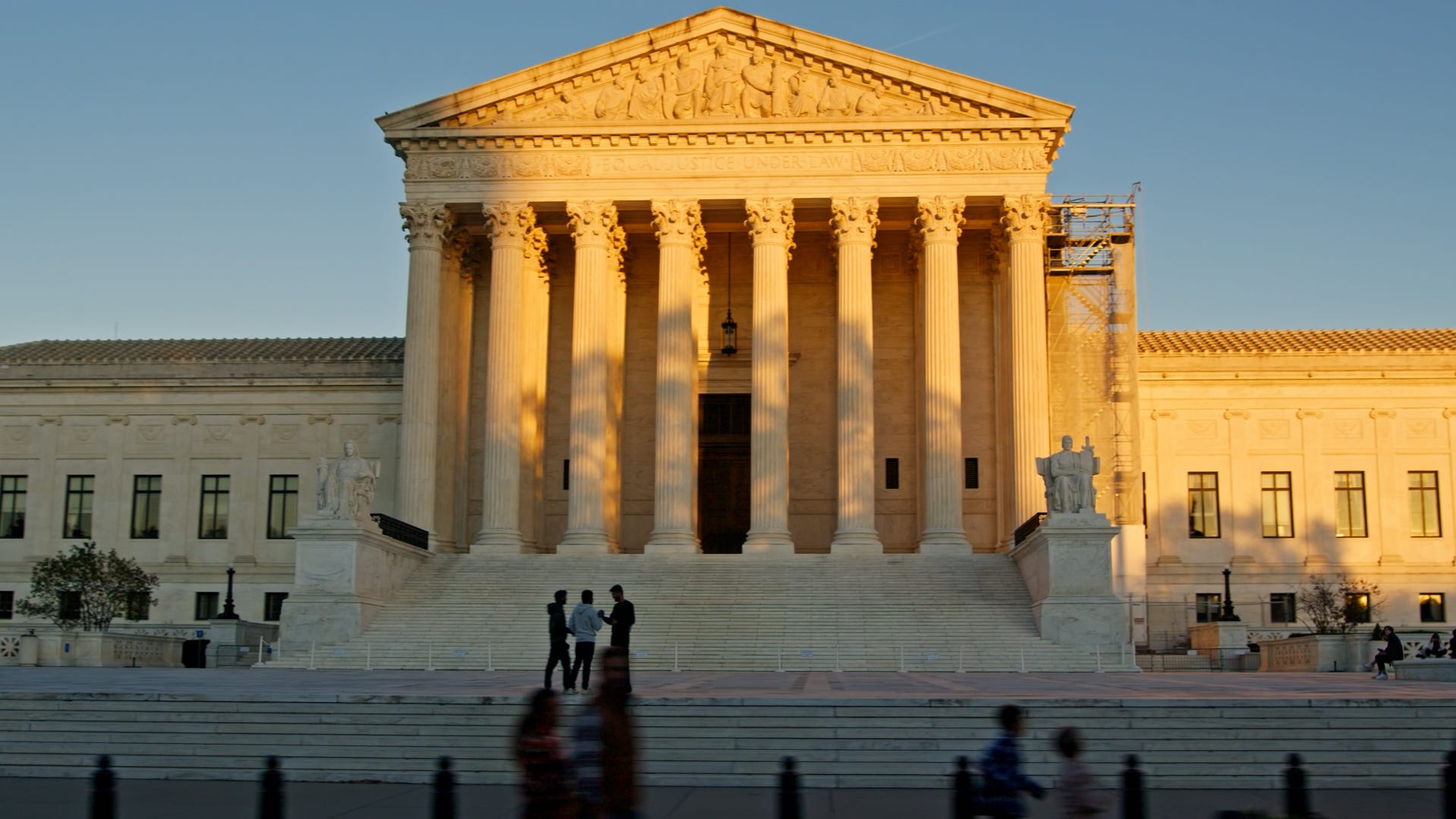

The Supreme Court docket takes up the ‘conversion remedy’ case in Colorado
U.S. Supreme Court docket justices heard oral arguments on Colorado’s ban on “conversion remedy.”
- A Livonia man is asking the U.S. Supreme Court docket to halt his prosecution for allegedly threatening an Oakland County election official.
- Andrew Hess was charged below Michigan’s anti-terrorism legislation after an worker reported listening to him say, “Dangle Joe for treason.”
- Hess argues that his remark was a political exaggeration, protected by the First Modification, and never a “actual risk.”
A Livonia man accused of threatening an Oakland County election official is asking the U.S. Supreme Court docket to intervene and cease the county from prosecuting him.
On Tuesday, October 7, an emergency request was filed by the American Freedom Legislation Middle, a company in Ann Arbor that says his mission is to “fight for faith and freedom,” on behalf of Andrew Hess, who was charged below Michigan legislation with making a terroristic risk.
Hess was charged after attending a recount in December 2023, throughout which an election employee stated she heard him say, “Dangle Joe for treason,” apparently referring to Oakland County Elections Director Joe Rozell.
The recount included a proposal from Royal Oak to implement ranked-choice voting, which narrowly handed, although it stays unfeasible below present state legislation. When voting by ranked alternative, voters typically rank the candidates so as of choice. Candidates with the bottom first-place totals are eradicated and the next-place candidates from their voters obtain their votes till a candidate receives greater than 50% of the vote.
Hess, described in his emergency submitting with the Supreme Court docket as “an outspoken critic of the best way elections are carried out in Michigan, notably in Oakland County,” has maintained in court docket filings that any feedback he made had been “offhand” and “political commentary and hyperbole,” protected by the First Modification’s free speech rights, and that Michigan legislation alone ought to apply on ‘actual threats’.
Hess has stated that the specter of conviction and the restrictions on his journey and allow to hold a hid firearm have endangered his life, harm his job prospects and even prevented him and his household from touring to “get a pet for his or her kids from a breeder in Indiana.”
The terroristic risk statute is a misdemeanor punishable by a positive of as much as $20,000 and a jail sentence of as much as 20 years.
The American Freedom Legislation Middle has filed the request for an emergency injunction towards Oakland County Prosecutor Karen McDonald and the county sheriff’s division with U.S. Supreme Court docket Justice Brett Kavanaugh, who’s overseeing the requests from Michigan and surrounding states. Kavanaugh can situation the order pending additional motion within the case, or refer the case to the total court docket for consideration.
Decrease courts, together with the U.S. Court docket of Appeals for the sixth Circuit in Cincinnati, have denied Hess’ request for an injunction. A 3-judge panel for the sixth Circuit dominated that whereas Hess says the Michigan legislation is unconstitutional as a result of it doesn’t particularly require proof that offensive speech is prone to incite violence, these speeches had been discovered to be reckless to the extent that they might be interpreted as a “real risk” and are additionally not protected by the First Modification.
The sixth Circuit stated Michigan courts have already dominated that it’s as much as a trial court docket to find out whether or not a suspect’s speech recklessly threatened violence.
Hess has steered that the truth that he was allowed again into the recount room and that any feedback he made weren’t instantly addressed to Rozell and that in a “half-empty foyer” he didn’t threaten anybody, including that “no affordable individual on the planet” would think about it a “critical expression of intent to commit an act of terror.”
“We disagree,” the sixth Circuit stated. “Whether or not Hess’s assertion was a critical assertion or merely a political exaggeration… (are) questions for the fact-finder.”
Contact Todd Spangler: tspangler@freepress.com. Observe him on X @tsspangler.








Steak ‘n Shake says it’s removing all microwaves from restaurants by April 15

‘One Battle After Another,’ ‘Frankenstein’ Top Winners at Costume Designers Guild Awards

Switzerland to vote June 14 on 10 million population cap proposal

Ilia Malinin wows crowd with historic backflip, helps US win team gold

Republicans slam Dem Senator for requiring IDs at rallies while opposing voter ID

Disney’s ‘Snow White’ remake reportedly lost nearly $170 million

DHS arrests criminal illegal migrant protected by sanctuary policies in Oregon

One suspect in custody after Oakland University stabbing

US District Judge rules that President Trump can dismantle USAID

Who’s running for Michigan’s 10th Congressional District?

When is Holland’s tulip festival? What to know about the west Michigan event

WATCH LIVE: Stranded NASA astronauts heading back to Earth in SpaceX capsule

President Trump’s Address to Congress – Key Takeaway

5 common Michigan snakes you may see as the weather warms

Michigan hunter? Here’s a list of the hunting seasons for 2025

La Loulou brings a slice of Paris to Piedmont Ave., Cafe Noir moves to Prescott Market
-
 Michigan11 months ago
US District Judge rules that President Trump can dismantle USAID
-
 Macomb County10 months ago
Who’s running for Michigan’s 10th Congressional District?
-
 Michigan10 months ago
When is Holland’s tulip festival? What to know about the west Michigan event
-
 National News11 months ago
WATCH LIVE: Stranded NASA astronauts heading back to Earth in SpaceX capsule
-
 Michigan11 months ago
President Trump’s Address to Congress – Key Takeaway
-
 Michigan10 months ago
5 common Michigan snakes you may see as the weather warms
-
 Michigan10 months ago
Michigan hunter? Here’s a list of the hunting seasons for 2025
-
 Oakland County9 months ago
La Loulou brings a slice of Paris to Piedmont Ave., Cafe Noir moves to Prescott Market