
Michigan
Michigan cannabis companies cut jobs ahead of new 24% wholesale tax


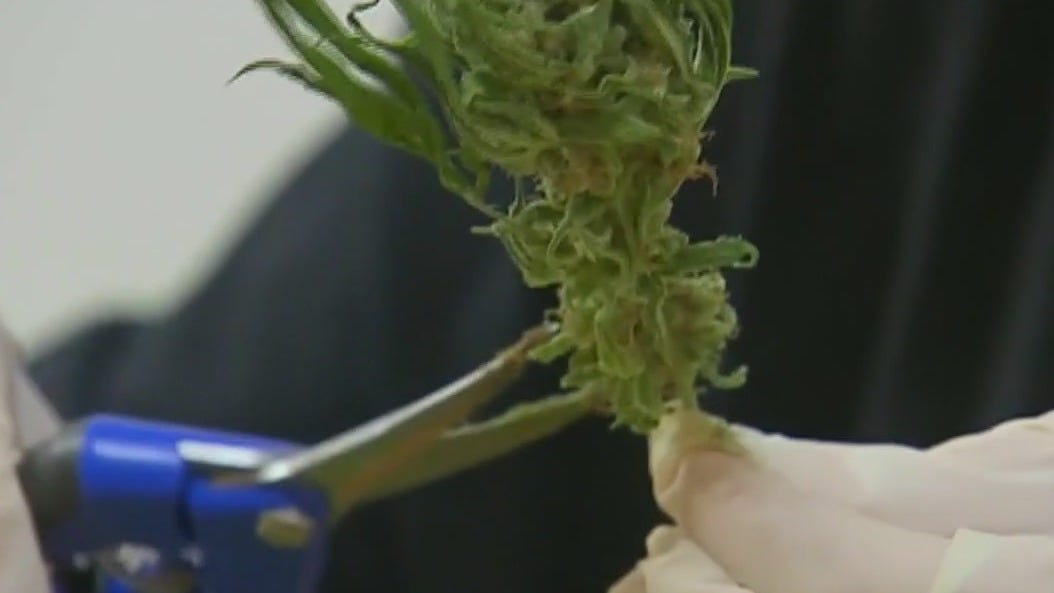

There are spikes in hashish use amongst youngsters
A brand new research reveals that younger individuals are much less prone to imagine that hashish could be dangerous and that the variety of unintended edible consumptions has elevated since legalization.
Fox – 10 Phoenix
- Two Michigan hashish firms will lay off workers, citing a brand new 24% wholesale tax on marijuana.
- Multistate hashish firm C3 Industries, based mostly in Ann Arbor, mentioned Dec. 15 that it will shut its cultivation facility in Webberville, close to Lansing, in mid-February.
- That very same day, Higher Peninsula-based hashish firm Greater Love mentioned it had laid off about 60 workers due to the tax.
Michigan’s hashish business is beginning the brand new 12 months with a brand new 24% wholesale tax, and a few firms are already responding with layoffs and facility closures.
Multi-state hashish firm C3 Industries, based mostly in Ann Arbor said in a Discover of Adjustment and Employee Retraining despatched to the state on Dec. 15, which mentioned the cultivation facility in Webberville, close to Lansing, would shut in mid-February. Greater than sixty workers will lose their jobs.
That very same day, the Higher Peninsula-based hashish firm Higher love mentioned it has laid off about 60 workers due to the tax. WARN Act notices should be despatched by employers of a sure measurement and 60 days earlier than layoffs.
These strikes come as Michigan’s hashish market struggles with oversupply, falling costs and uncertainty about potential federal modifications, together with the potential rescheduling of marijuana.
However within the brief time period, marijuana firms say the tax burden will burden an business that already operates on skinny margins, resulting in increased costs for customers, who could then flip to the illicit marketplace for cheaper marijuana. Because of this, gross sales at authorized pharmacies will decelerate and firms will go bankrupt.
C3 Industries cited the “deterioration of market situations in Michigan, exacerbated by oversupply and the looming wholesale tax” as the reason why the power shouldn’t be economically viable.
Joni Moore, president of Greater Love, mentioned in an interview with the Detroit Free Press that when she calculated the prices of working a enterprise and added a 24% wholesale tax on prime of the opposite taxes hashish firms pay, she realized the enterprise would not be worthwhile.
“The maths tells you that that does not make hashish a really worthwhile enterprise, and that actually wasn’t the case earlier than they handed the 24% wholesale tax,” she mentioned. “There was a really small margin there. So after we noticed this was coming, we got here collectively in our firm and put our heads collectively. What can we do? All we may do was attempt to streamline our processes and lay individuals off,” she mentioned.
“It was actually heartbreaking,” Moore mentioned of the layoffs. “We’ve got at all times been an organization that really cares about our communities, and it has at all times been a fantastic supply of pleasure for us that we pay the next wage than anybody else.”
Moore mentioned the common wage for a Greater Love worker is $30 per hour, together with advantages.
Moore laid off 61 workers of the corporate’s 213 workers on Dec. 15, Greater Love’s first layoffs because it opened its cultivation facility in 2019. The layoffs occurred throughout the board, however the majority had been pharmacy gross sales associates, together with workers working within the distribution and processing facility and company headquarters.
“These are small, rural communities right here within the Higher Peninsula,” she mentioned. “So jobs usually are not that straightforward to seek out, and these had been good-paying jobs that supported households. We have at all times taken that very critically, and in order that was very troublesome.”
A Michigan senator representing the UP, Sen. Ed McBroom, R-Vulcan, supported the wholesale tax as a result of he thought it may result in “some right-sizing.”
“I’ve communities in UP which can be overrun with shops, overrun with pharmacies,” McBroom mentioned earlier than the price range was handed in October. “We’ve got an business that’s uncontrolled (and) too huge.”
Moore disputed that characterization, saying marijuana dispensaries herald guests from different cities and states, corresponding to Wisconsin and Minnesota, who store at marijuana shops, in addition to eat at eating places and purchase fuel whereas on the town.
Moore mentioned McBroom’s feedback had been a part of the explanation she needed to maintain Greater Love’s pharmacies open. She mentioned Greater Love does not plan to go the tax on to customers, however expects the tax will nonetheless result in fewer gross sales as a result of hashish customers dwelling in Wisconsin and Minnesota assume costs are increased at Michigan dispensaries and will not exit of their option to drive to Michigan for marijuana, she mentioned.
Moore mentioned she is now contemplating increasing Greater Like to different states.
“We will certainly keep in UP, however we’re now not going to speculate some huge cash within the state,” she mentioned.
Contact Adrienne Roberts: amroberts@freepress.com










‘Buddy’ Review: Keegan-Michael Key Voices an Orange Plush Unicorn Turned Homicidal Maniac in Patchy Horror Comedy Co-Starring Cristin Milioti

Snow arrives Sunday in metro Detroit

Trump threatens Canada with 100% tariffs over China trade deal: What we know

‘Bedford Park’ Review: Two Lonely Souls Navigate Familial Burdens and Korean American Identity in Stephanie Ahn’s Delicately Poignant Debut

Is it legal to warm up your car? Do you even need to? What to know

Ethan Hawke and Woody Harrelson Swap Robert Redford Stories at Sundance: “I Wet Myself”

Rolllover Crash on I-75 Leaves One Man Injured, Another Dead

Why Olivia Wilde Made Her Latest Movie ‘The Invite’ Outside the Studio System

US District Judge rules that President Trump can dismantle USAID

Who’s running for Michigan’s 10th Congressional District?

When is Holland’s tulip festival? What to know about the west Michigan event

WATCH LIVE: Stranded NASA astronauts heading back to Earth in SpaceX capsule

President Trump’s Address to Congress – Key Takeaway

5 common Michigan snakes you may see as the weather warms

Michigan hunter? Here’s a list of the hunting seasons for 2025

La Loulou brings a slice of Paris to Piedmont Ave., Cafe Noir moves to Prescott Market
-
 Michigan11 months ago
US District Judge rules that President Trump can dismantle USAID
-
 Macomb County9 months ago
Who’s running for Michigan’s 10th Congressional District?
-
 Michigan9 months ago
When is Holland’s tulip festival? What to know about the west Michigan event
-
 National News10 months ago
WATCH LIVE: Stranded NASA astronauts heading back to Earth in SpaceX capsule
-
 Michigan11 months ago
President Trump’s Address to Congress – Key Takeaway
-
 Michigan9 months ago
5 common Michigan snakes you may see as the weather warms
-
 Michigan9 months ago
Michigan hunter? Here’s a list of the hunting seasons for 2025
-
 Oakland County9 months ago
La Loulou brings a slice of Paris to Piedmont Ave., Cafe Noir moves to Prescott Market