Michigan
Michigan Child care providers worry about fed’s plan to freeze funds



The Problem of Low Wages for Youngster Care Employees in Michigan
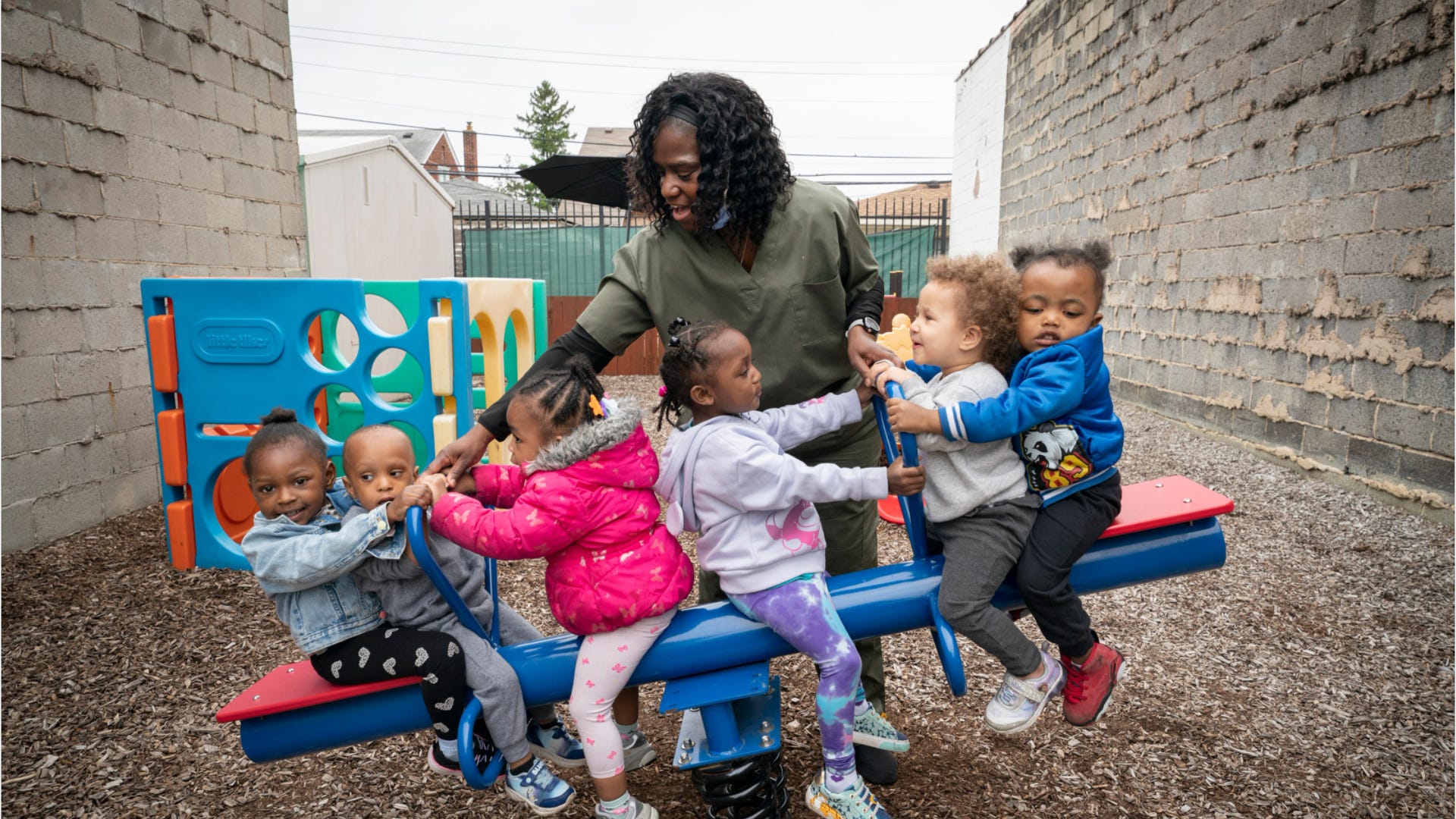
Youngster care staff in Michigan, together with passionate educators like Carla Brown, face low wages and restricted advantages regardless of their important function in youngsters’s improvement.
- Childcare suppliers in Michigan haven’t but been affected by the measure, however are involved it might derail their enterprise
- The federal authorities has introduced a nationwide freeze on childcare funds, saying this can require extra scrutiny.
Childcare suppliers have been involved beginning in 2026 about federal authorities plans to finish the subsidy funds they rely upon.
The newest was introduced on Dec. 31, when the Trump administration mentioned it could freeze baby care funds nationwide following its determination to freeze funds to Minnesota. in the wake of a viral video from a conservative influencer who claimed he had found fraud at a slew of childcare services there.
The federal Division of Well being and Human Companies issued a press release saying it would require states to supply further documentation “resembling written justification, receipts or photographic proof” to obtain federal funds. Childcare suppliers in Michigan haven’t but been affected.
“Right now, Michigan has not been notified of any adjustments that will impression our capacity to make frequently scheduled baby care funds,” mentioned Aundreana Jones-Poole, spokesperson for MiLEAP, the early childhood company accountable for administering the subsidy program. MiLEAP will proceed to maintain Michigan baby care suppliers knowledgeable of latest developments, she mentioned.
Because the state waits for additional steerage, suppliers like Kai Younger stay involved about what’s going to occur if their funds are disrupted.
When Younger, who owns two baby care places in Detroit, initially heard that the Trump administration was saying it could increase the federal freeze on baby care funds to all states, her first thought was “this might kill me,” she mentioned.
“It will be a disaster, that is the one phrase I can consider. I would not have the ability to survive… it could be the top of my enterprise.”
Younger serves a complete of 34 youngsters at her two places, the vast majority of whom depend on the state’s baby care subsidy, which is funded largely by means of federal funds that the Trump administration mentioned would not be disbursed to states with out further verification. These funds make up a big portion of the earnings of suppliers like Younger, who select to take low-income youngsters whose households can’t afford the excessive value of kid care with out the subsidy.
With out subsidy funds, Younger estimates she would not have the ability to survive quite a lot of months and would solely have the ability to cowl payroll prices. That is with financial savings — a luxurious that many baby care suppliers throughout the state haven’t got given the trade’s notoriously excessive prices and tight margins.
“If I can not function, households cannot go to work and infants cannot eat,” she mentioned.
In response to a Jan. 2 notice on the state’s baby care supplier portal, the state mentioned it was conscious that the federal authorities had “activated new protocols for releasing federal baby care funds to states” however had not but been notified of adjustments that will impression their capacity to make their frequently scheduled funds to baby care suppliers throughout the state.
“It is plenty of watching, listening and praying,” Younger mentioned.
What are federal baby care funds used for in Michigan?
As in different states in the USA, federal baby care funds make up the majority of the cash going to Michigan’s baby care subsidy, often called the Youngster Improvement and Care Scholarship, or CDC. The CDC permits income-eligible households to use for money help to assist pay for childcare, a price that has become increasingly unaffordable for many American families.
In the newest fiscal yr, about $430 million in federal funds and about $66 million in state funds have been allotted to Michigan’s baby care subsidy program, based on information from Michigan’s Home Fiscal Company. In any given month in 2025, there have been on common about 45,000 youngsters in Michigan receiving subsidies.
In Michigan, suppliers can select whether or not or to not settle for youngsters with state subsidies. In response to estimates from 2024, that is the case the nearly 8,000 providers across the state, about half of them took the grant. For suppliers in low-income areas the place the vast majority of households of their group can’t afford childcare, the overwhelming majority of their earnings comes from the subsidy.
For this reason for suppliers like Younger, a freeze on federal baby care subsidies could possibly be instantly disastrous, as suppliers depend on this bimonthly earnings to pay workers salaries, lease, utilities and meals for youngsters.
“The impression can be speedy and important,” mentioned Matt Gillard, president and CEO of the kid advocacy group Michigan’s Youngsters.
Gillard mentioned the truth that MiLEAP was in a position to efficiently apply for federal funds on Jan. 2, the primary pay interval after HHS’s announcement, is an effective signal. However uncertainty lies forward as new particulars emerge about what the federal authorities would require sooner or later from states requesting funding.
“I have been proven to be naive earlier than, however this might be a giant deal in the event that they have been freezing funds due to some YouTuber in Minnesota,” Gillard mentioned.
How the system works
Whereas Conservative influencer Nick Shirley’s specific claims are unsubstantiated In response to investigations, Minnesota’s model of the CDC, often called the Youngster Care Help Program, has had a historical past of fraud within the baby care subsidy system over the previous decade, which the Trump administration cited in its reasoning for chopping off funding to the state.
An independent investigation by state auditors in 2019 revealed between $5 million and $6 million in fraud in payments to service providers between 2013 and 2018. Audits of In more recent years, it has been found that a lack of oversight of attendance documentation in Minnesota child care centers “resulted in overpayments to providers”, in a number of instances.
Gillard mentioned every state’s baby care subsidy program is designed in a different way, from eligibility necessities to how usually subsidy funds are made.
“It is senseless to freeze funds to all states based mostly on allegations in a single state,” he mentioned.
In Michigan’s system, a household applies for the kid care subsidy and is accepted or denied based mostly on their earnings eligibility. The household should then search for a childcare supplier who will obtain the subsidy and have locations out there. As soon as a household registers with a childcare location, MiLEAP pays the state subsidy for that baby on to the childcare location.
MiLEAP mentioned in an electronic mail that it has a zero-tolerance coverage concerning abuse of the state subsidy program.
“MiLEAP baby care applications are topic to common oversight, together with annual audits by state and federal entities, and the division follows established procedures to determine, stop and report suspected fraud or misuse of funds to the Workplace of Inspector Normal,” Jones-Poole wrote in an emailed assertion.
As a supplier, Younger says MiLEAP requires her to strictly file when every of her youngsters utilizing the CDC is dropped off and picked up, by way of a sign-in type. This info is reported to the state each ten days, when Younger payments the state for the earlier two weeks of care. This information ensures that if Younger have been checked, she might show that she didn’t fabricate the occasions a toddler was current.
“There’s rather a lot we have to do to show that these children which can be in our system are coming after they’re supposed to return in,” she mentioned.
Following the newest allegations of fraud in Minnesota’s baby care subsidy system, the Trump administration has elevated scrutiny of 4 further states: California, Colorado, Illinois and New York. On January 5, HHS told the New York Post that it will withhold $10 billion in child care and welfare funds from these statesciting considerations that Democratic-led states had allowed the fraud to proceed.
On January 5, Republican Senator Aric Nesbitt, who’s working for governor, publicly known as on Michigan’s unbiased auditor normal to research the state’s CDC program.
“Discovering reasonably priced baby care is among the largest challenges Michigan households face. We should guarantee they aren’t taken away by criminals, as occurred to Minnesota taxpayers,” Senator Nesbitt’s assertion mentioned.
Curtis Hertel, chairman of the Michigan Democratic Celebration, responded to Nesbitt’s name for an investigation into baby care fraud in Michigan in a press release later that very same day: “That is only a determined try by Aric Nesbitt to distract from his disastrous file of constructing it more durable for fogeys to get reasonably priced baby care.”
Younger mentioned she is upset that this incident has largely solid baby care suppliers in a adverse gentle.
“The vast majority of folks I am related to know we’re doing it for the best motive,” she mentioned. “Offering youngsters with high-quality baby care that they usually can’t afford.”
Beki San Martin is a fellow on the Detroit Free Press overlaying baby care, early childhood training and different points impacting the lives of youngsters 5 and below and their households in metro Detroit and throughout Michigan. Contact her at rsanmartin@freepress.com.
This fellowship is supported by the Bainum Household Basis. The Free Press retains editorial management over this work.








David Jonsson and Tom Blyth’s Prison Thriller ‘Wasteman’ to Screen for Free in Over 100 U.K. Theaters (Exclusive)

The Farmers’ Almanac saved from closure. Details on new owner

Minneapolis agitators allegedly bankrolled by CCP-linked millionaire Singham

Michigan family takes home seizure case to Supreme Court over $1,600 tax

EPA begins removing hazards from former EMCO Chemical plant

President Trump, Tom Homan and the hard truth about immigration and public safety

Senate panel debates banning masks, other measures for ICE in Michigan

Trump administration fires back at Arlington County over ICE directive

US District Judge rules that President Trump can dismantle USAID

Who’s running for Michigan’s 10th Congressional District?

WATCH LIVE: Stranded NASA astronauts heading back to Earth in SpaceX capsule

When is Holland’s tulip festival? What to know about the west Michigan event

President Trump’s Address to Congress – Key Takeaway

5 common Michigan snakes you may see as the weather warms

Michigan hunter? Here’s a list of the hunting seasons for 2025

La Loulou brings a slice of Paris to Piedmont Ave., Cafe Noir moves to Prescott Market
-
 Michigan11 months ago
US District Judge rules that President Trump can dismantle USAID
-
 Macomb County10 months ago
Who’s running for Michigan’s 10th Congressional District?
-
 National News11 months ago
WATCH LIVE: Stranded NASA astronauts heading back to Earth in SpaceX capsule
-
 Michigan9 months ago
When is Holland’s tulip festival? What to know about the west Michigan event
-
 Michigan11 months ago
President Trump’s Address to Congress – Key Takeaway
-
 Michigan9 months ago
5 common Michigan snakes you may see as the weather warms
-
 Michigan9 months ago
Michigan hunter? Here’s a list of the hunting seasons for 2025
-
 Oakland County9 months ago
La Loulou brings a slice of Paris to Piedmont Ave., Cafe Noir moves to Prescott Market