
Michigan
Michigan tribes warn members about ICE agents. What they’re advising


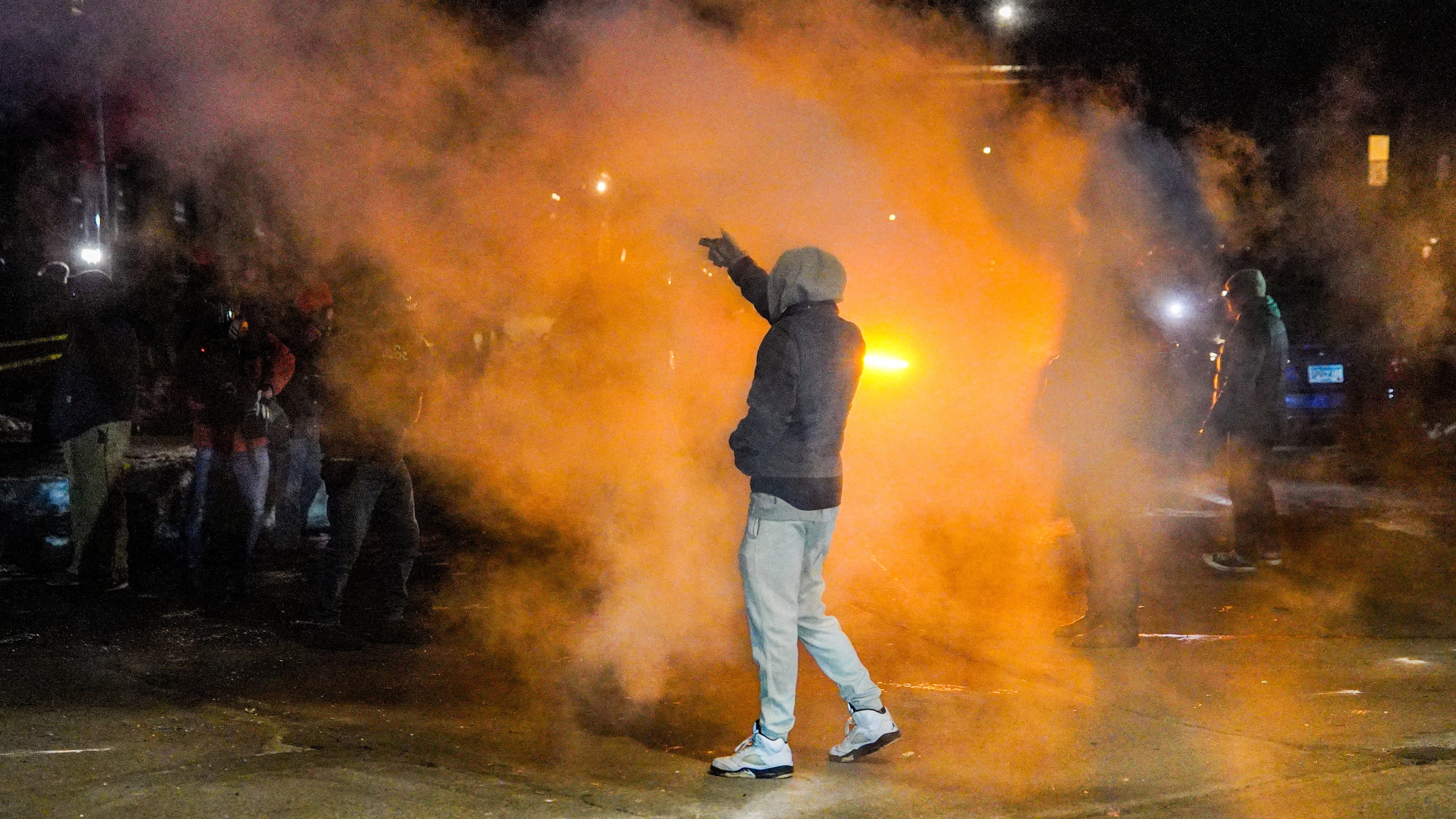

Protests have erupted nationwide in opposition to ICE immigration enforcement
The video of Renee Good’s taking pictures instantly went viral. In the meantime, investigations by state and native authorities have been blocked by federal officers.
The Grand Traverse Band of Ottawa and Chippewa Indians added its voice to a rising variety of Michigan tribes on Thursday, January 15, warning members about Immigration and Customs Enforcement brokers, and tips on how to cope with them.
A minimum of 5 from Michigan 12 federally recognized Native American tribes have now issued statements to their members to warn them about interactions with ICE and to emphasise tribal members’ rights as U.S. residents.
“Current authorized developments and Supreme Court docket rulings have approved federal brokers, together with ICE, to conduct transient investigative detentions – generally known as ‘Kavanaugh stops’ – based mostly on perceived ethnicity, language or occupation,” the Grand Traverse Band stated in an FAQ for members. “Given these racial profiling practices which have the impact of together with Native People as a category topic to ‘Kavanaugh stops,’ all GTB tribal members are suggested to know their rights and the authorized weight of their tribal identification in defending you from ICE enforcement practices.
This week, ICT, a nonprofit information group that shares tales from indigenous communities, reported that at least five Indians had been detained throughout ICE operations in Minneapolis, Minnesota, regardless of being U.S. residents.
Tensions have elevated in Minneapolis and throughout the nation within the wake of the disaster fatal shooting of an unarmed woman by ICE agents within the metropolis, and a second non-fatal taking pictures. Protests in opposition to ICE passed off throughout the nation on Sunday, January 11, whilst President Donald Trump threatened to invoke the Revolt Act to ship in troopers to cease the protests.
Along with the warning from the Grand Traverse Band, the Bay Mills Indian Neighborhood, the Sault Ste. Marie Tribe of Chippewa Indians, the Little Traverse Bay Bands of Odawa Indians and the Little River Band of Ottawa Indians have additionally issued warnings on Fb to tribal members about ICE in latest days.
“The latest actions of Immigration & Customs Enforcement (ICE) have created concern, confusion and uncertainty. Top-of-the-line methods to guard ourselves is to learn and ready,” the Little Traverse Bay Band stated in a Fb put up. “As Waganakising Odawak, we’re household. As household, we should maintain one another.”
The recommendation from the tribes consists of requiring them to hold their tribal ID always, which states they’re a tribal member and a U.S. citizen if contacted by ICE, that silence is a proper, and what to do and who to name if they’re detained.
Here is what Michigan tribes are telling their members.
What does the Bay Mills Indian Neighborhood say?
Within the wake of the Minneapolis shootings and detentions, Bay Mills Indian Neighborhood President Whitney Gravelle on Jan. 13, a Fb put up warned members that ICE could be working within the Higher Peninsula and reminded tribal members that they maintain U.S. citizenship.
“In latest weeks, tensions have elevated as U.S. Immigration and Customs Enforcement (ICE) brokers have stopped and detained tribal members and tribal descendants, elevating pressing issues in regards to the dignity, security and respect of Native Americans,” Gravelle wrote. “Residents, together with all tribal residents of the Bay Mills Indian Neighborhood, are U.S. residents by regulation – underneath the Snyder Act, also referred to as the Indian Citizenship Act of 1924. ICE has no jurisdiction over U.S. residents in issues of immigration.”
In a two-page FAQ, The Bay Mills Indian Neighborhood stated all tribal residents ought to guarantee they’ve a legitimate and present tribal ID and registration card. The FAQ additionally suggested members to be ready to indicate further documentation if requested, together with gadgets corresponding to passport, passport card, actual ID or immigration standing papers.
What’s the Sault Ste. Says the Marie Tribe of Chippewa Indians?
Sault Tribal Chairman Austin Lowes spoke out in opposition to “latest aggressive Immigration and Customs Enforcement actions” in a Jan. 14 information launch.
“The Sault Ste. Marie Tribe of Chippewa Indians strongly condemns latest Immigration and Customs Enforcement (ICE) actions which have brought about concern, confusion and nervousness inside Native communities and amongst minority communities extra broadly. Enforcement actions that depend on intimidation and racial profiling undermine public belief and endanger harmless individuals,” Lowes stated within the information launch.
“The Sault Ste. Marie Tribe of Chippewa Indians strongly condemns latest Immigration and Customs Enforcement (ICE) actions which have brought about concern, confusion and nervousness inside Native communities and amongst minority communities extra broadly. Enforcement actions that depend on intimidation and racial profiling undermine public belief and endanger harmless individuals,” Lowes stated within the information launch.
“Let me be clear: the Sault Tribe stands in opposition to any ICE exercise that causes concern and nervousness in each tribal communities and bigger communities at massive. Nobody ought to really feel unsafe of their neighborhood, workplace, or homeland due to the best way they give the impression of being, the language they communicate, or the nation they had been born in,” Lowes stated within the assertion. “Current incidents involving the illegal detention of tribal residents from federally acknowledged tribal states are deeply disturbing and unacceptable. Tribal residents are members of sovereign governments. These actions disregard tribal sovereignty and the tribal relationship between tribes and the US.”
What do the Little Traverse Bay Bands of Odawa Indians say?
“The latest actions of Immigration & Customs Enforcement (ICE) have created concern, confusion and uncertainty. Top-of-the-line methods to guard ourselves is to learn and ready,” the tribe stated in a Fb put up. “Try the sources on our Citizen Portal on our LTBB authorities web site, utilizing the QR codes or hyperlink under. Share together with your family members, particularly those that is probably not energetic on social media, use QR codes or use our tribal web site usually. This data may even be included in our subsequent version of the Odawa Trails Publication.
“We recognize the persistence and beauty you’ve gotten given us as we’ve got labored on how finest to navigate these uncharted waters. Chi-miigwech,” the put up stated.
The 14th of January post recorded QR codes that join the details about particular person rights, recommendation on tips on how to deal with an ICE interplay and different data.
What does the Little River Band of the Ottawa Indians say?
In a January 13 Fb put up: the tribe shared information about particular person rights if you’re approached by ICE brokers, what to do if somebody is detained, and what to do after being detained.
What does the Grand Traverse Band of the Ottawa and Chippewa Indians say?
In a January 15 Facebook post: the tribe posted an “advisory to Grand Traverse Band (GTB) tribal members concerning encounters with Immigration and Customs Enforcement (ICE), a Division of Homeland Safety company that enforces immigration regulation.”
A letter within the message states: “Given these racial profiling practices that lead to Native People being included as a category topic to ‘Kavanaugh stops,’ all GTB tribal members are suggested to know their rights and the authorized weight of their tribal identification in defending you from ICE enforcement practices.”
The message too contains a frequently asked question with details about particular person rights, what to do if contacted by ICE and different data.
What’s the Snyder Act?
The Indian Citizenship Act of 1924, also referred to as the Snyder Act, was signed into regulation by President Calvin Coolidge on June 2, 1924, granting full citizenship to American Indians and Alaska Native People, in keeping with the U.S. Division of the Inside – Indian Affairs.
The fifteenth Modification, handed in 1870, granted all Americans the best to vote, no matter race. was not until 1924 that American Indians and Alaska Native People would have the ability to benefit from the rights granted by the modification, the Inside Division stated.
“That all non-citizen Indians are born inside the territorial limits of the US, are, and are hereby declared, residents of the US: Supplied, that the grant of such citizenship shall not in any means impair or in any other case impair the best of any Indian to tribal or different property,” the invoice reads.












Car crashes through Detroit Metro Airport’s McNamara Terminal

Virginia Democrats propose removing minimum sentences for violent crimes

More bitter cold, and then the snow comes

Live updates: Dangerous winter storm blasting America with heavy snow and crippling ice

Customers scurry to Jon’s Country Burgers drive-in for final meal. When it’s closing

Anti-ICE agitators march to, rally at Target Center in downtown Minneapolis

Multiyear I-94 construction to start near Detroit Metro Airport

Sen. Ted Cruz returns to Texas ahead of major winter storm forecast

US District Judge rules that President Trump can dismantle USAID

Who’s running for Michigan’s 10th Congressional District?

When is Holland’s tulip festival? What to know about the west Michigan event

WATCH LIVE: Stranded NASA astronauts heading back to Earth in SpaceX capsule

President Trump’s Address to Congress – Key Takeaway

5 common Michigan snakes you may see as the weather warms

Michigan hunter? Here’s a list of the hunting seasons for 2025

La Loulou brings a slice of Paris to Piedmont Ave., Cafe Noir moves to Prescott Market
-
 Michigan11 months ago
US District Judge rules that President Trump can dismantle USAID
-
 Macomb County9 months ago
Who’s running for Michigan’s 10th Congressional District?
-
 Michigan9 months ago
When is Holland’s tulip festival? What to know about the west Michigan event
-
 National News10 months ago
WATCH LIVE: Stranded NASA astronauts heading back to Earth in SpaceX capsule
-
 Michigan11 months ago
President Trump’s Address to Congress – Key Takeaway
-
 Michigan9 months ago
5 common Michigan snakes you may see as the weather warms
-
 Michigan9 months ago
Michigan hunter? Here’s a list of the hunting seasons for 2025
-
 Oakland County9 months ago
La Loulou brings a slice of Paris to Piedmont Ave., Cafe Noir moves to Prescott Market