
National News
Unique Roman relic discovered in New Orleans backyard traced to World War II theft

NEWNow you can hearken to Fox Information articles!
A New Orleans couple unearthed a mysterious Roman relic of their yard this 12 months — and now officers know why it ended up there.
The Preservation Useful resource Heart of New Orleans (PRCNO) shared the discovery on Oct. 6, detailing how a spring backyard venture grew to become a global ordeal.
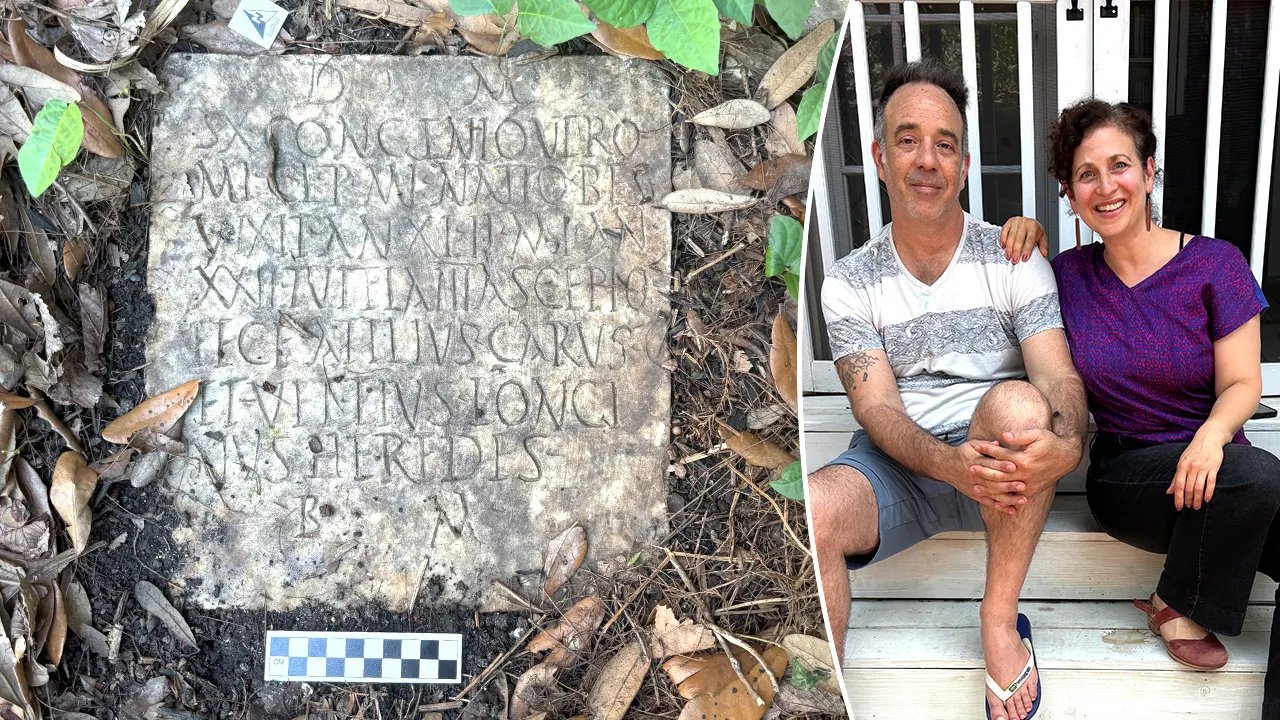
Daniella Santoro and Aaron Lorenz have been clearing brush from their historic house in Carrollton in March after they got here throughout a marble pill etched in Latin.
TREASURES IN ITALY, INCLUDING 2,300 YEAR OLD GRAVE, RAISED DURING SEWER PLANT
A photograph of the stone exhibits it partially buried amongst weeds and lifeless leaves. Santoro, an anthropologist at Tulane College, instantly contacted native officers.
A spread of consultants grew to become concerned within the search – from faculty professors to members of the FBI’s Artwork Crime Workforce. They have been capable of decode the Latin inscription.
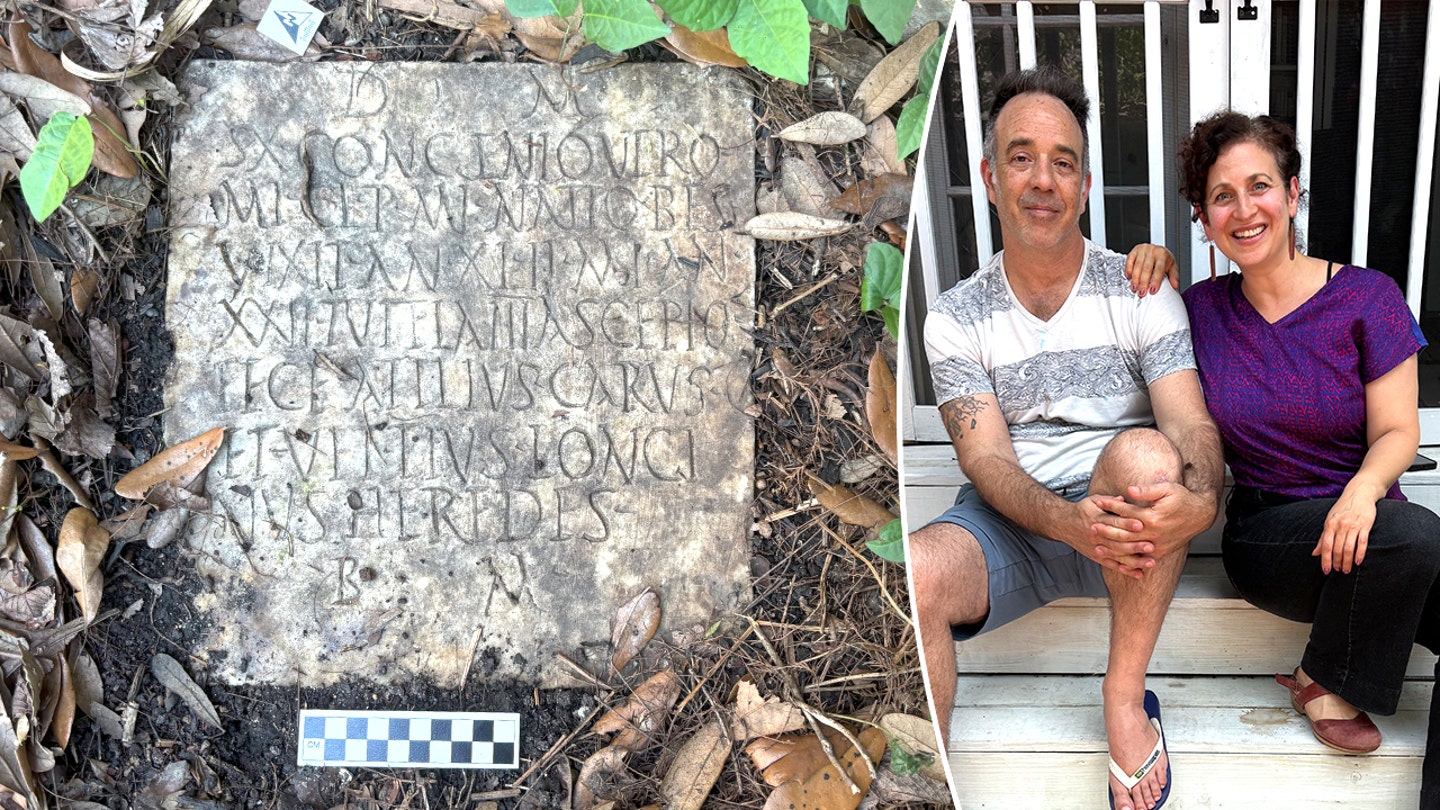
A New Orleans couple found a Roman relic of their yard that had been lacking from an Italian museum for many years. (D. Ryan Grey; Susann Lusnia)
The marble relic was an historical Roman funerary artifact for a sailor named Sextus Congenius Verus.
The inscription was lacking from a museum in Civitavecchia, Italy, a metropolis about 35 miles (56 kilometers) north of Rome.
Phrase finally reached Erin Scott O’Brien, the previous proprietor of the Carrollton house, who was shocked by the information.
CLICK HERE TO SIGN UP FOR OUR LIFESTYLE NEWSLETTER
It turned out that she had positioned the slab in her yard in 2004.
“We planted a tree and mentioned that is the start of our new home, let’s put it exterior in our yard,” O’Brien advised PRCNO’s Preservation in Print.

The relic found in a New Orleans backyard as soon as honored a Roman sailor named Sextus Congenius Verus. (Susan Lusnia)
“I simply thought it was a murals,” she mentioned. “I had no concept it was a 2,000-year-old relic.”
The stone’s earlier house owners have been O’Brien’s grandparents, Charles and Adele Paddock, who each died within the Nineteen Eighties.
CLICK HERE FOR MORE LIFESTYLE STORIES
Charles Paddock served in Italy throughout World Struggle II and met his spouse there, suggesting the couple might have introduced it from Civitavecchia.
The museum was broken by Allied bombing within the mid-Forties.
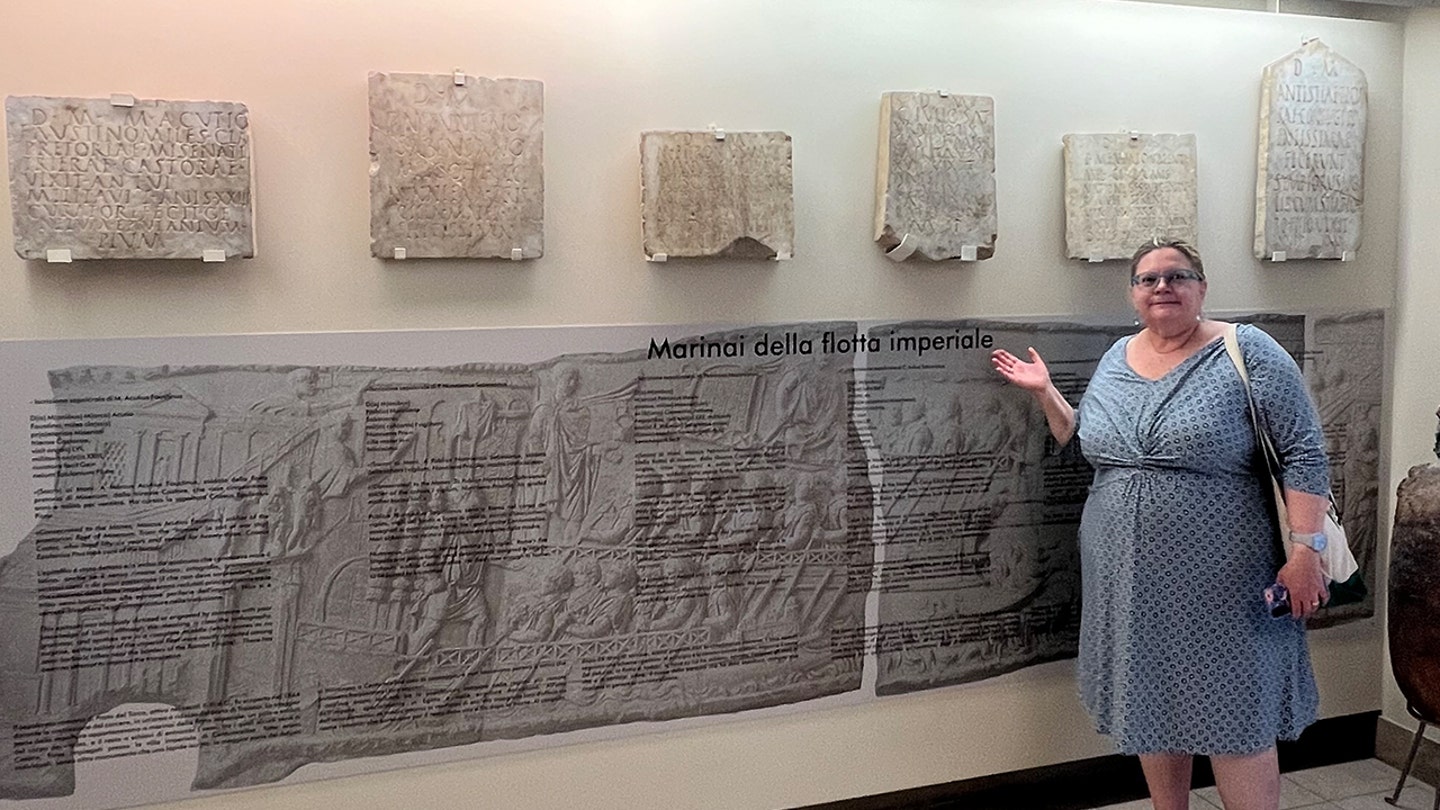
Tulane professor Susann Lusnia traveled to Italy to help within the repatriation of the artifact. (Susan Lusnia)
It’s unclear how the Paddocks obtained the stone, however the artifact is at present in FBI custody and will likely be returned to Italy.
Professor Susann Lusnia of Tulane College, a part of the crew that recognized the artifact, not too long ago visited the museum in Civitavecchia as a part of the repatriation effort.
TEST YOURSELF WITH OUR LATEST LIFESTYLE QUIZ
“It is superb,” O’Brien mentioned. “It is nice that it is going again to the place it belongs.”
Preservation in Print editor Daniel Monteverde advised Fox Information Digital that this was one of the crucial distinctive tales he has seen within the Huge Straightforward in his twenty years of reporting.

The marble pill present in Carrollton was traced to a museum in Civitavecchia, Italy, north of Rome. (Jeffrey Greenberg/Common Photographs Group by way of Getty Photographs)
“It is a information city with a lot historical past and shade that it is hardly shocking,” he mentioned. “However this can be probably the most distinctive story I’ve come throughout. It was a no brainer for us to share it when it landed on my desk.”
CLICK HERE TO DOWNLOAD THE FOX NEWS APP
He added: “I am glad this artefact was discovered by somebody who had the appropriate background to understand it was one thing particular and to get it into the arms of the individuals who might look at it – and finally return it to its rightful proprietor.”











‘The Blood Countess’ Review: Isabelle Huppert Sinks Her Teeth Into a Juicy Slice of Vampire Camp That Looks Ravishing but Wears Thin

Scientific society conference includes anti-Trump talks, woke content

Apple News bias: ex-liberal mag editor tasked to curate stories for iPhone users

Judge orders DTE to pay $100M penalty over Zug Island factory pollution

Lake Orion’s Erik Meerschaert Named Regional Teacher of the Year

NYPD rescues injured bald eagle stranded on Hudson River ice

Serbian Filmmakers Call Out “State-Sponsored Censorship” in Open Letter

First-grade teacher allegedly disciplined for refusing to read LGBTQ book

US District Judge rules that President Trump can dismantle USAID

Who’s running for Michigan’s 10th Congressional District?

When is Holland’s tulip festival? What to know about the west Michigan event

WATCH LIVE: Stranded NASA astronauts heading back to Earth in SpaceX capsule

President Trump’s Address to Congress – Key Takeaway

5 common Michigan snakes you may see as the weather warms

Michigan hunter? Here’s a list of the hunting seasons for 2025

La Loulou brings a slice of Paris to Piedmont Ave., Cafe Noir moves to Prescott Market
-
 Michigan12 months ago
US District Judge rules that President Trump can dismantle USAID
-
 Macomb County10 months ago
Who’s running for Michigan’s 10th Congressional District?
-
 Michigan10 months ago
When is Holland’s tulip festival? What to know about the west Michigan event
-
 National News11 months ago
WATCH LIVE: Stranded NASA astronauts heading back to Earth in SpaceX capsule
-
 Michigan12 months ago
President Trump’s Address to Congress – Key Takeaway
-
 Michigan10 months ago
5 common Michigan snakes you may see as the weather warms
-
 Michigan10 months ago
Michigan hunter? Here’s a list of the hunting seasons for 2025
-
 Oakland County9 months ago
La Loulou brings a slice of Paris to Piedmont Ave., Cafe Noir moves to Prescott Market