
Michigan
Worst stock market days in history

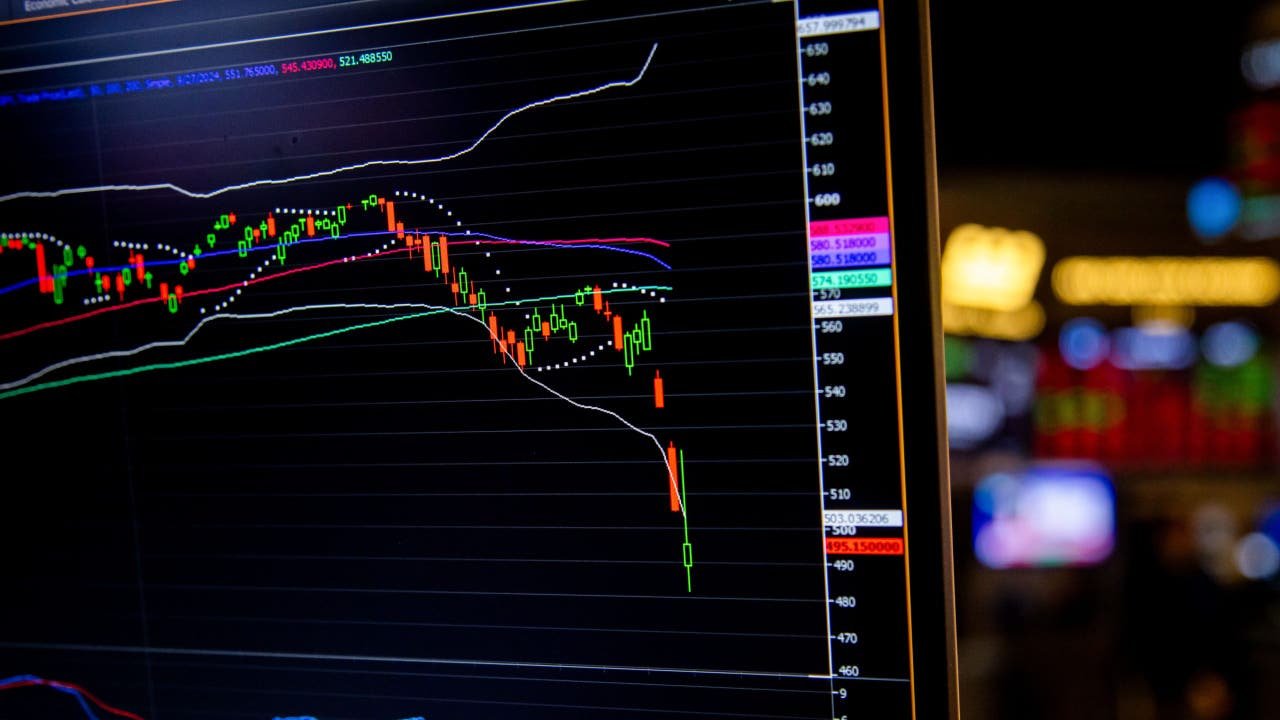
Stock Shock continues: World responds to rates
The inventory shock is sustained as a result of Dow, S&P 500 and Nasdaq are below intense stress for a second day, as a result of worldwide buyers promote shares in response to President Trump’s main charges towards most US buying and selling companions, together with China that takes revenge. LIVENOW’s Austin Westfall discusses the adjustments with Jerry Parker, CEO of Chesapeake Capital.
President Donald Trump’s tariff will increase introduced final week To roast global trade and swing -sharing markets.
Final week’s dive on the American market is likely one of the steepest of the final decade, however the day that the inventory market took the largest hit, nonetheless dates as much as the 80s.
Here’s a retrospective of a few of the worst days within the historical past of the inventory market:
Worst inventory trade days in historical past
The graph above final week exhibits the inventory market along with a few of the worst collective day by day decreases within the inventory market between the three main inventory exchanges: the Dow Jones Industrial Common, the S&P 500 and the Nasdaq composite.
For context, Last week’s decline is included.
DIVERS DEPERTION:
Dow Jones Industrial common worst day: October 19, 1987, fell 22.61%
S&P 500 Worst Day: October 19, 1987, fell 20.47%
Nasdaq worst day: March 3, 2020, fell 12.32%
Worst inventory market Day by day Level is falling
Inventory market factors versus proportion drops
A proportion change within the inventory market displays the rise or lower in worth, whereas some extent improve or lower may be extra helpful within the context of demonstrating the general well being of the market.
Learn extra about a few of the worst days within the historical past of the inventory market under.
RELATED: Stocks Tumbling like Trump’s Rates Roil Global Markets
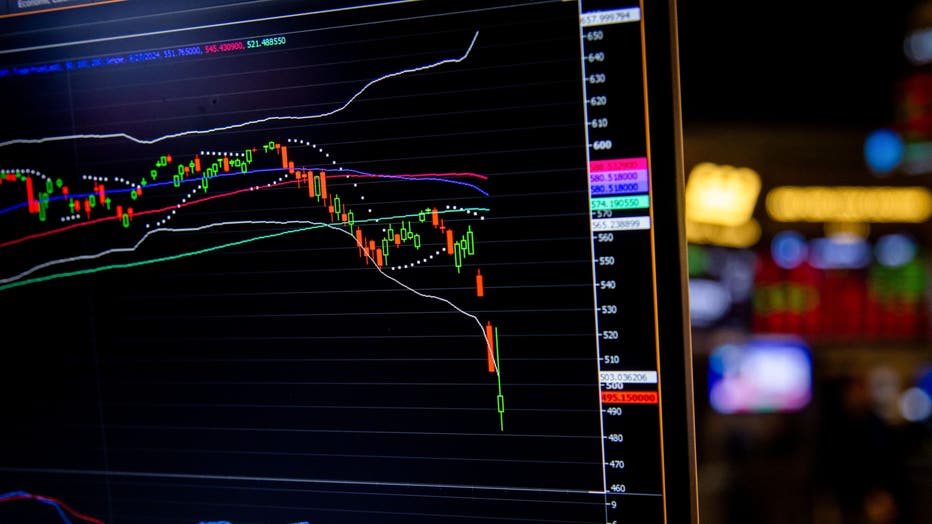
A monitor exhibits an S&P 500 ETF Spy card on the ground of the New York Inventory Trade (NYSE) in New York, USA, on Monday 7 April 2025. Photographer: Michael Nagle/Bloomberg through Getty Pictures
Black Monday – 1987
The background story:
On October 19, 1987, the inventory market crashed into what grew to become generally known as “Black Monday”. Varied financial and structural defects led to the crash, According to the history of the Federal Reserve.
By the figures:
- Dow Jones Industrial Common: Deprest 22.6%, 508 factors
- S&P 500: Deputy 20.4%, 58 factors
- NASDAQ: Deputy 11.3%, 46 factors
March 16, 2020 inventory market
The background story:
March 16, 2020 was the worst day for the inventory market because the 1987 crash, pushed by concern concerning the COVID-19 Pandemie and its impression on the worldwide financial system.
A few days earlierThe Trump administration acknowledged a nationwide emergency and further journey prohibitions and commenced to implement the State governments.
By the figures:
- Dow Jones Industrial Common: Fell 12.9%, 2,997 factors
- S&P 500: 12%, 325 factors dropped
- Nasdaq: Deputy 12.3%, 970 factors
Wall Road Crash from 1929
The background story:
On October 29, 1929, ‘Black Tuesday’ descended on the New York Inventory Trade. The costs collapsed within the midst of panic and hundreds of buyers had been swept away when the good melancholy of America started.
By the figures:
Completely different dates on the finish of October and early November in 1929 the S&P 500 and the Dow drove off. The Nasdaq composite didn’t but exist. The 2 markets took the largest hit on October 28, 1929:
- Dow Jones Industrial Common: Fell 12.8%, 38 factors
- S&P 500: Depart 12.3%, 3 factors
The supply: Details about the inventory market costs of the Dow Jones, S&P 500 and Nasdaq is derived from varied searchable public registers. Background details about the inventory market crash of 1987 and the Covid -Pandemic timeline got here from the FED and CDC web sites respectively. This story was reported from Detroit.










Eric Dane dead after long battle with ALS

Christian teacher Ashley Flynn shot and killed at Tipp City, Ohio, home

Eric Dane, Dr. Mark “McSteamy” Sloan on ‘Grey’s Anatomy,’ Dies at 53

Dem-tied Senate hopeful has funneled nearly $400k to his family, financial disclosures show

Former Sen Ben Sasse discusses cancer death sentence in interview

303 Virginia students suspended after participating in anti-ICE walkout

Macomb woman accused of soliciting, blackmailing men via adult websites

Oakland’s Alysa Liu wins gold medal in Olympic figure skating

US District Judge rules that President Trump can dismantle USAID

Who’s running for Michigan’s 10th Congressional District?

When is Holland’s tulip festival? What to know about the west Michigan event

WATCH LIVE: Stranded NASA astronauts heading back to Earth in SpaceX capsule

President Trump’s Address to Congress – Key Takeaway

5 common Michigan snakes you may see as the weather warms

Michigan hunter? Here’s a list of the hunting seasons for 2025

La Loulou brings a slice of Paris to Piedmont Ave., Cafe Noir moves to Prescott Market
-
 Michigan12 months ago
US District Judge rules that President Trump can dismantle USAID
-
 Macomb County10 months ago
Who’s running for Michigan’s 10th Congressional District?
-
 Michigan10 months ago
When is Holland’s tulip festival? What to know about the west Michigan event
-
 National News11 months ago
WATCH LIVE: Stranded NASA astronauts heading back to Earth in SpaceX capsule
-
 Michigan12 months ago
President Trump’s Address to Congress – Key Takeaway
-
 Michigan10 months ago
5 common Michigan snakes you may see as the weather warms
-
 Michigan10 months ago
Michigan hunter? Here’s a list of the hunting seasons for 2025
-
 Oakland County9 months ago
La Loulou brings a slice of Paris to Piedmont Ave., Cafe Noir moves to Prescott Market