
National News
Courage Under Fire

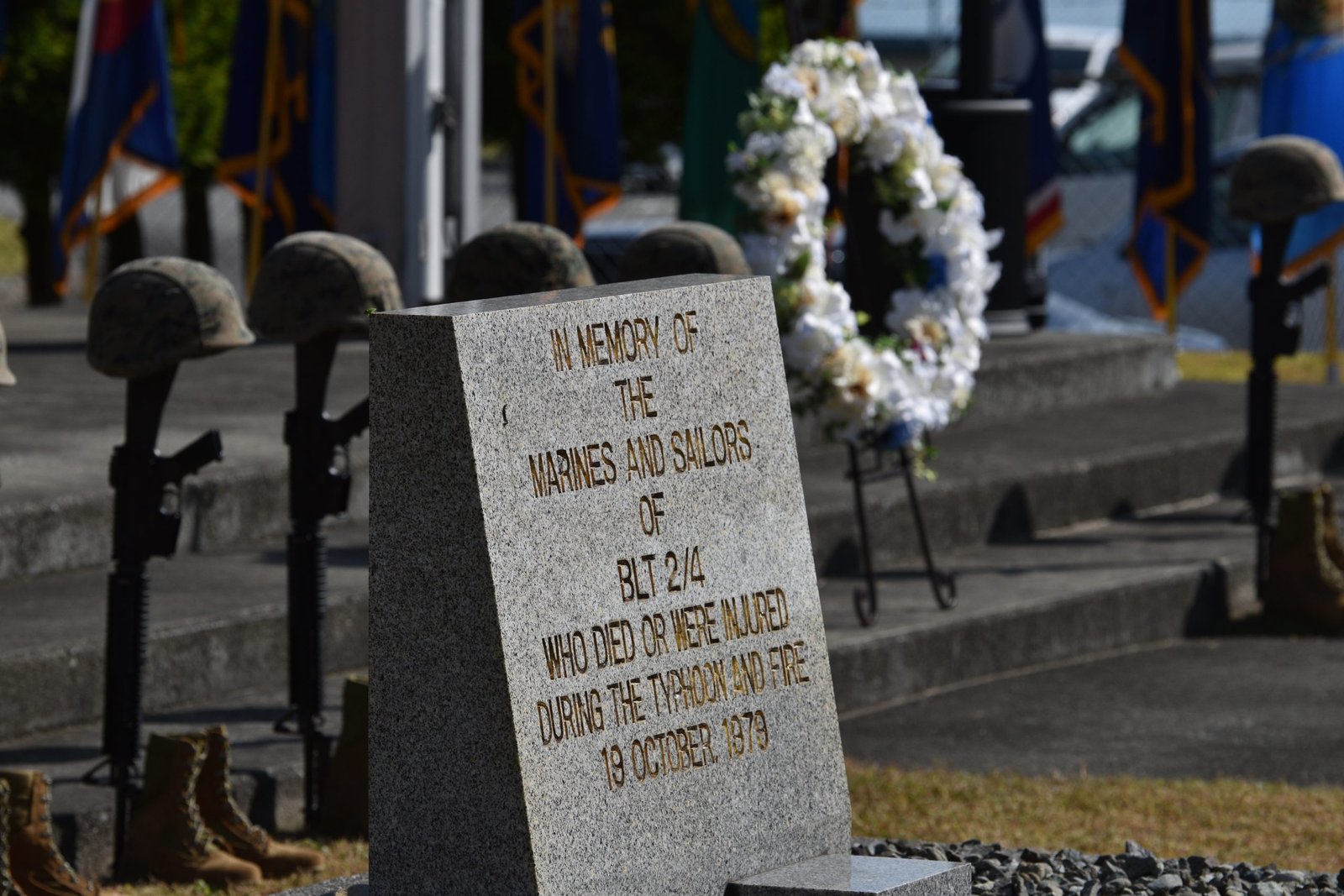
First got here the water that poured down the slopes of Japan’s Mount Fuji on October 19, 1979. Then on prime of the flows got here the fireplace that killed 13 U.S. Marines and burned dozens of others. Though researchers might not have consulted the Bible afterward, they finally attributed the bizarre mixture of parts to the identical pressure that, based on the E-book of Exodus, enveloped historic Egypt in hail and hearth. “It was an act of God,” researchers concluded.
In Fuji hearthMarine veteran and journalist Chas Henry supplies a much-needed recent have a look at “the worst peacetime catastrophe within the historical past of america Marine Corps,” because the incident shortly grew to become recognized. The concept for the e-book got here to Henry a number of years in the past after he posted in regards to the hearth on social media, however found that lots of his followers had no reminiscence of it. Multiple responded, “What sort of hearth?”
Till it was too late on that October day in 1979, the greater than 1,200 Marines stationed at a Spartan coaching camp on Mount Fuji would have requested the identical factor. That they had been instructed to not be careful for hearth, however for a hurricane named Tip, which nonetheless holds the report for the strongest cyclone ever recorded. The army had discovered the arduous approach to take these storms critically. Within the final yr earlier than the Japanese surrendered in World Struggle II, typhoons had killed a whole bunch of American sailors and broken dozens of ships within the Pacific.
Nonetheless, forecasters anticipated Camp Fuji to overlook the worst of Tip. Listening to that it will deliver solely “reasonable to heavy rainfall,” the Marines made plans to experience out the storm within the steel huts that handed by as their dwelling quarters. The lads learn and performed playing cards at the same time as a pouring rain, which finally amounted to almost 12 inches, indicated an error within the forecast. The water rolling down the mountain seeped by means of the cracks within the huts till the bunks changed into islands in a present greater than an inch deep. To maintain out wind gusts of greater than 80 miles per hour, the Marines bolted the doorways shut with out contemplating that they’d blocked their very own escape.
A number of hundred yards up the mountain from the barracks, the soggy floor eroded round a spot the place Marines saved and distributed gas. A bladder containing greater than 5,000 gallons of gasoline fell, ruptured and launched its contents into the rain coming down the slope. When the Marines smelled the fumes and observed the sheen within the water, there was no time to place out cigarettes or flip off the kerosene heaters that heated the cabins. Both supply, Henry speculates, may have precipitated the fireplace.
The Marines had gone to Camp Fuji to check their fight readiness, however no quantity of coaching may have ready them for what adopted. Quotes from the greater than 100 Marines whose recollections type the spine of Henry’s e-book finest recreate the scene: the “gigantic hum, a sort of beginning blast furnace,” “the fireball… twice as excessive” as a hut, after which water “as much as your knees and the fireplace… on prime of it.” One Marine recalled standing in a hut dealing with a “wall of fireside.” Exterior, one other noticed “a river of fireside” flowing from one constructing to a different.
Extra poignant than the flames had been the pictures of the injured. “It was fairly horrible,” stated one witness, “as a result of all their hair was gone, and a few of them had their ears gone. And also you could not inform if it was a black man or a white man.” In some circumstances, their pores and skin had merely fallen off.
This all occurs earlier than half time Fuji hearth. If the e-book had adopted the current pattern in chronicles of pure disasters, many of the relaxation would have targeted on the query of blame. Plainly not a single storm makes landfall right this moment with out days of reports protection attempting to hyperlink the devastation to presidential management failures or local weather change. A historical past of the Camp Fuji hearth may simply have gone this manner, particularly because it had an undeniably man-made element: not like the U.S. Military, the Marines lacked a wise coverage of storing gas uphill from buildings. Some at Camp Fuji had harbored considerations.
However Henry takes his story in a extra shocking course. Though he rejects the “act of God” rationalization, he’s much less involved with the seek for particular person guilt than with an opposing concept: the selflessness that turns individuals into Marines. “Till you see it and expertise it firsthand,” says one observer quoting Henry, “you do not actually perceive what that Marine esprit de corps is about.” As in any story about Marines combating their means into Japan throughout World Struggle II, Fuji hearth provides a way of this esprit.
It is evident within the unexpectedly quiet hospitals the place wounded Marines resisted the urge to whine about their misfortunes as a result of they feared others had it worse. “If we had been in a civilian burn unit proper now, the screaming could be unbelievable,” stated one surgeon.
That is evident from the day by day journeys that severely burned Marines made to the so-called tank, the place medical doctors scrubbed away the scabs that fashioned over wounds. Males who may barely stroll to the tank on their very own received away from bed with none problem to escort a buddy there.
It’s evident in how the Navy group mobilized to make it doable for the households of the wounded to stay at their bedsides at Brooke Military Medical Heart in San Antonio. With out receiving any orders or cost, a Marine Corps colonel drove just a few hundred miles to the hospital with a suitcase filled with procuring baggage full of money, as he put it, “for anybody who wants cash,” after which gave one thing much more useful: his time.
In conveying the spirit of the Marines, Henry has an incredible benefit: he has lasted twenty years. His writing – particularly his descriptions of a climate reconnaissance aircraft flying by means of Tip and of the C-141 flights evacuating the wounded to america – has the element, sharpness and polish of the uniform he wore. In the end, he concludes that the Camp Fuji hearth is the results of what he calls a “methods accident,” involving so many interconnected elements that it’s not possible to separate each from the others. A Marine would perceive.
The People had been too fast to maneuver on from what had occurred at Camp Fuji. The beginning of the Iran hostage disaster, just a few weeks after the fireplace drove the story out of newspapers and tv information. Little was left however a stone memorial on the slopes of Fuji to commemorate what occurred on the camp, however Henry didn’t overlook it. The fireplace had burned the faces of even many survivors past recognition, however he remembered who they had been and tracked down as lots of them and the family members of the lifeless as he may for his analysis.
Because the Marine Corps celebrates the 250th anniversary of its founding in November, Fuji hearth stays true to historical past. For the writer there may be no higher reward than semper fidelis.
Fuji Fireplace: Sifting the Ashes from a Forgotten U.S. Marine Corps Tragedy
by Chas Henry
Potomac Books, 328 pages, $36.95
Jonathan Horn is the latest writer of The Destiny of the Generals: MacArthur, Wainwright, and the Epic Battle for the Philippines.










Trump threatens 100% tariffs on Canada over potential China trade deal

‘I Want Your Sex’ Review: Gregg Araki Is Back in Vintage Form, Throwing a Deliciously Paired Olivia Wilde and Cooper Hoffman Into Sub/Dom Jeopardy

NYC mayor announces no snow days ahead of winter storm, doctors speak out

Mike Rowe warns AI coming for coders, not welders as tech reshapes workforce

‘New generation’: Hispanic GOP candidates predict pivotal shift in midterm election

Stone Age dog buried with 5,000-year-old dagger unearthed in Sweden

Aaron Spencer charged with murder after shooting alleged rapist in Arkansas

Michigan Lottery Daily 3, Daily 4 results for Jan. 23, 2026

US District Judge rules that President Trump can dismantle USAID

Who’s running for Michigan’s 10th Congressional District?

When is Holland’s tulip festival? What to know about the west Michigan event

WATCH LIVE: Stranded NASA astronauts heading back to Earth in SpaceX capsule

President Trump’s Address to Congress – Key Takeaway

5 common Michigan snakes you may see as the weather warms

Michigan hunter? Here’s a list of the hunting seasons for 2025

La Loulou brings a slice of Paris to Piedmont Ave., Cafe Noir moves to Prescott Market
-
 Michigan11 months ago
US District Judge rules that President Trump can dismantle USAID
-
 Macomb County9 months ago
Who’s running for Michigan’s 10th Congressional District?
-
 Michigan9 months ago
When is Holland’s tulip festival? What to know about the west Michigan event
-
 National News10 months ago
WATCH LIVE: Stranded NASA astronauts heading back to Earth in SpaceX capsule
-
 Michigan11 months ago
President Trump’s Address to Congress – Key Takeaway
-
 Michigan9 months ago
5 common Michigan snakes you may see as the weather warms
-
 Michigan9 months ago
Michigan hunter? Here’s a list of the hunting seasons for 2025
-
 Oakland County9 months ago
La Loulou brings a slice of Paris to Piedmont Ave., Cafe Noir moves to Prescott Market