Michigan
GOP senator says Michigan child care subsidy needs audit


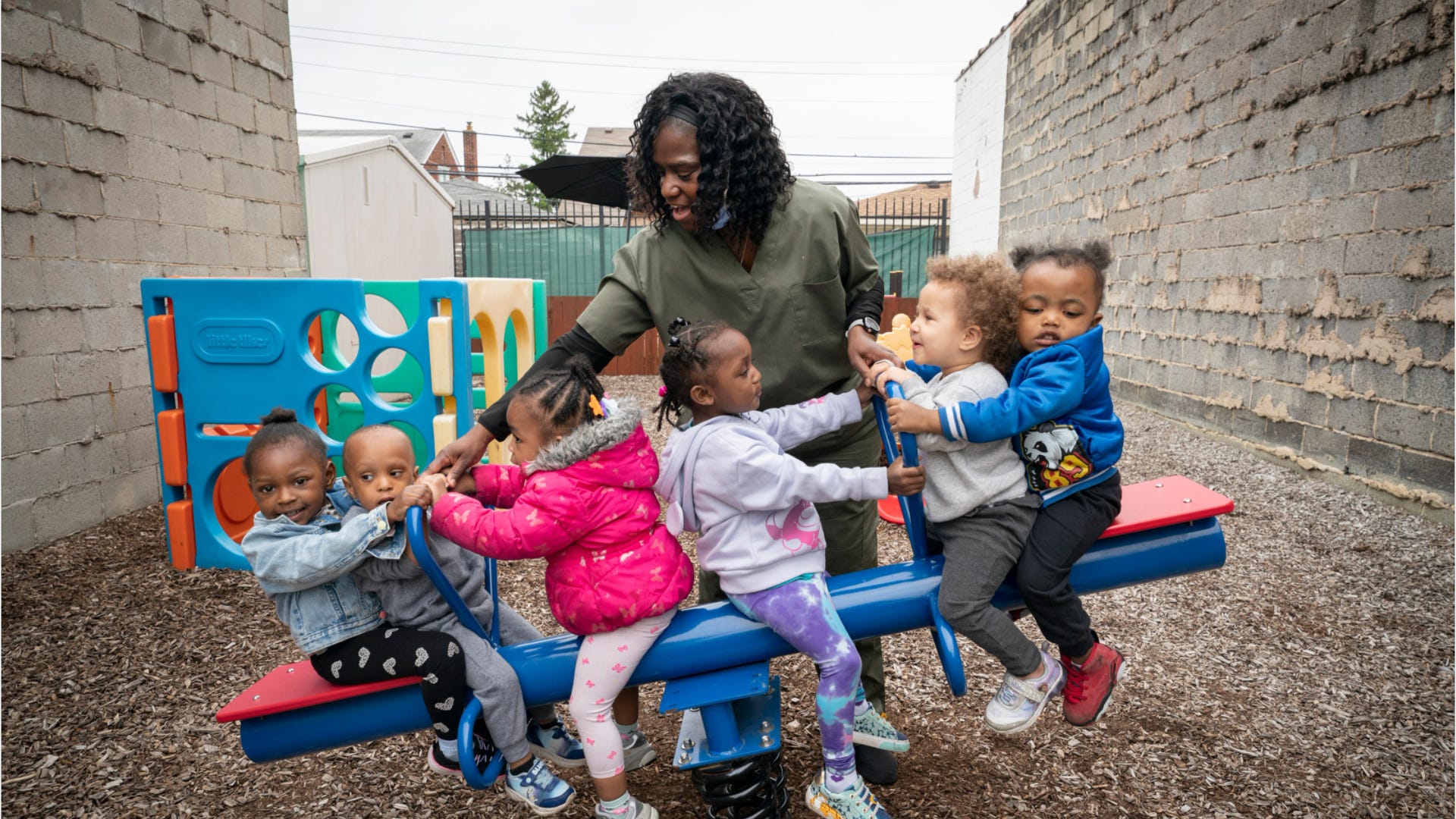

The problem of low wages for youngster care staff in Michigan
Youngster care staff in Michigan, together with passionate educators like Carla Brown, face low wages and restricted advantages regardless of their essential position in youngster improvement.
- The state’s youngster care subsidy program helps low-income households afford youngster care.
The elevated scrutiny that began in Minnesota’s youngster care subsidy program has unfold to packages in states throughout the nation, together with Michigan.
However is it warranted? How does Michigan’s youngster care subsidy work and the way is it funded? Are there legit issues over fraud in Michigan’s youngster care subsidy program? And are youngster care suppliers within the state involved in regards to the situation?
Right here’s what we all know:
What does Michigan’s youngster care subsidy program do?
The state’s youngster care subsidy program helps low-income households afford youngster care.
In the event you’re questioning why authorities funds assist households pay for youngster care, it’s as a result of the price of care is simply too excessive for a lot of to afford. In Michigan, the common annual price of kid care per child ranges between round $8,000 to almost $13,000, and households incomes state median revenue find yourself spending between 11% to almost 40% of their revenue on youngster care, according to a Child Care Aware state report.
Households must go to work, in order that they want youngster care, and the subsidy offers low-income households entry to youngster care they wouldn’t in any other case have the ability to afford.
The method for a dad or mum to get their youngster on the state subsidy goes like this: A household applies by way of the Michigan Division of Well being and Human Providers, which determines whether or not or not they’re eligible for this system based mostly on their revenue. In Michigan, a family of four can make around up to around $64,000 or less to be eligible.
Apart from figuring out eligibility, the remainder of the subsidy program is run by way of the state’s early childhood company, MiLEAP. As soon as a household is decided eligible, it should discover a youngster care supplier that takes the subsidy — not all accomplish that as a result of getting paid by the state can pose challenges like fee delays. Youngster care suppliers that settle for youngsters on the subsidy invoice the state for the price of caring for these youngsters.
This system is funded by way of federal and state funds — round $430 million in federal funds and round $66 million in state funds had been allotted to the kid care subsidy program in the latest fiscal yr, in line with knowledge from Michigan’s Home Fiscal Company.
Why is high GOP Senate management calling for an audit of this system?
State Senate Republican Chief Sen. Aric Nesbitt, R-Porter Township, has referred to as for an audit of Michigan’s youngster care subsidy program within the wake of a viral video conservative YouTuber Nick Shirley posted proper after Christmas, by which Shirley alleges uncovering hundreds of thousands in fraud at plenty of Somali-owned youngster care facilities in Minnesota.
Shirley’s claims stay unverified after state investigations found the centers Shirley accused of wrongdoing operating normally, although investigations into among the facilities are ongoing. Minnesota has a documented historical past of fraud in its youngster care subsidy system, although nowhere close to as widespread as Shirley alleges, which is over $100 million. Following a 2019 audit that discovered between $5 million and $6 million in youngster care fraud, the state tightened program oversight.
What has adopted after Shirley’s video went viral — along with elevated immigration enforcement in Minnesota, protests, and the deadly capturing of 37-year-old Renee Nicole Good — is a flurry of federal motion. This features a nationwide funding freeze that can require all states to supply extra documentation to obtain federal youngster care funds, and a focused freeze of $10 billion in federal funds for youngster care and different social companies in Minnesota, New York, California, Illinois and Colorado. A federal judge blocked the $10 billion freeze, so funds have continued to movement to those 5 states because the lawsuit progresses.
Following the allegations of system-wide fraud in youngster care subsidy packages throughout the nation, Nesbitt, who’s operating to be the GOP candidate for governor, joined Republican lawmakers in other states who referred to as for elevated oversight of their states’ subsidy packages in a single type or one other.
“We should make sure that these taxpayer {dollars} are being spent to assist Michigan households, not international scammers. We can not afford to attend till the cash is all gone to start out asking questions,” Nesbitt said in a news release asserting his request.
Nesbitt told CBS Detroit that he had realized about potential situations of fraud from youngster care staff and was seeking to observe down the accusations, although his workplace didn’t reply to questions concerning what specific situations of fraud Nesbitt was referring to.
Nesbitt’s workplace is ready on Michigan’s workplace of the auditor common to determine what it should do with the request, Mathew Treadwell, Nesbitt’s press secretary, mentioned in an e mail.
Michigan Democratic Celebration Chair Curtis Hertel issued a press release calling Nesbitt’s name for an audit “a determined try … to attempt to distract from his disastrous observe file of creating it more durable for folks to get reasonably priced youngster care.”
Are youngster care subsidy packages susceptible to widespread fraud?
No, there’s nothing inherently susceptible to fraud in a baby care subsidy program, mentioned Ruth Friedman, a nationwide early childhood knowledgeable at The Century Basis, a progressive suppose tank, who referred to as claims of widespread fraud throughout youngster care subsidy packages “a manufactured disaster.”
Annual reports from the inspector general of the Michigan Department for Health and Human Services, which investigates “fraud, abuse, and waste” in public help packages all through the state, present that over the past decade, the kid care subsidy program has persistently decrease charges of fraud than different packages.
This system accounted for 1.2% of the fraud {dollars} MDHSS’s inspector common recognized. Since 2017, that quantity has been 10% or much less, and it was 20% in 2016. MDHHS didn’t reply to questions round what elements contributed to larger situations of fraud in 2016, or what made documented situations of fraud plummet within the following years.
Why is not there zero fraud in Michigan’s youngster care subsidy system?
It is essential to notice, too, that some coverage specialists keep that it’s almost not possible for the quantity of fraud in a public help program to be zero, provided that the extra regulation a program has, the more durable it might be for eligible candidates to get entry. A 2008 audit of Michigan’s CDC program by the Office of the Auditor General discovered round 20% of funds from the pattern of circumstances pulled “had been improper and doubtlessly fraudulent.” The report recognized plenty of points with this system, together with lack of documentation of dad or mum eligibility.
Following this audit, the subsidy program had tighter restrictions, just like the variety of hours a supplier might invoice the state each two weeks, narrower eligibility necessities for households and attendance verification necessities for suppliers.
Articles and official reports following this pivotal second for Michigan’s youngster care subsidy program point out a major decline in subsidy utilization by each mother and father and suppliers. From fiscal yr 2000 to fiscal yr 2022, CDC circumstances decreased by almost 64%, from round 65,000 circumstances to round 24,000.
Does Michigan’s youngster care subsidy program have widespread fraud?
Michigan’s youngster care subsidy program undergoes a number of state and federal oversight measures frequently, the outcomes of that are publicly out there, together with:
- Annual monetary audits by Michigan’s Workplace of the Auditor Normal.
- Periodic efficiency audits by Michigan’s Workplace of the Auditor Normal
- Annual investigations of program fraud by the Inspector Normal of Michigan’s Division for Well being and Human Providers
- Audits carried out every three years by the federal Office of Child Care, a course of that started in 2016. These federal audits cowl a number of standards together with “program integrity and accountability,” which incorporates “fraud investigation, fee restoration, and sanctions,” in line with an Administration for Children and Families overview document.
- MiLEAP randomly selects suppliers frequently for an audit of time and attendance information and billing statements to verify they adjust to CDC program pointers and that there aren’t any errors.
Primarily based on the charges of fraud documented by MDHHS, widespread fraud doesn’t look to be a systemic drawback in Michigan’s youngster care subsidy program. A part of it’s because this system is so closely regulated, mentioned Alicia Guevara, CEO of the Early Childhood Funding Company, a Michigan early childhood nonprofit.
“Are there issues to be improved, completely, and we must be involved about public {dollars} being utilized correctly, however once more there are controls in place,” she mentioned.
What are ‘improper funds’ and are these an issue within the subsidy program?
Specialists say there’s an essential distinction between fraud — whereby a supplier deliberately payments the state for nonexistent youngsters, mispresents companies or falsifies attendance information to fraudulently pocket taxpayer {dollars} — and situations by which suppliers invoice incorrectly for one motive or one other leading to a fee error.
Cost errors, or improper funds, should not essentially fraud, Friedman mentioned. “Actually, the overwhelming majority isn’t,” she mentioned.
Improper funds most frequently appear like unintentionally underpaying or overpaying a supplier as a result of info doesn’t get up to date in actual time, mentioned Bob Schneider, from the Residents Analysis Council of Michigan, who beforehand studied Michigan’s youngster care subsidy.
The state may overpay a supplier as a result of a dad or mum obtained a increase, went over this system’s revenue eligibility, and did not report it straight away. The household would find yourself getting a month of kid care subsidy when it’s now not eligible. The state may also underpay if a dad or mum’s revenue decreases and the state is meant to lower their co-pay however doesn’t, so the household continues paying greater than it ought to, which can be an improper fee.
The common nationwide fee error charge for improper funds is round 4%, according to federally reported data. States should usually report their charges to the federal Administration for Youngsters and Households and in a 2016 federal report, Michigan had a excessive fee error charge at round 30% in fiscal yr 2012.
In keeping with the Administration for Youngsters and Households, Michigan’s most just lately reported fee error charge was 12% in fiscal yr 2025. As a result of that charge is above the federal authorities’s permissible 10% threshold, Michigan has needed to share a plan with the federal authorities for the way it will lower its rate.
The state plans a “evaluate of widespread errors” and “expertise modifications,” along with reevaluation of state definitions of fee errors.
Cost error charges aren’t “a grimy secret,” mentioned Friedman.
“It’s how governments must be persevering with to evaluate how they’re doing and what they have to be doing to strengthen their insurance policies and procedures to verify this system is doing what it is presupposed to be doing,” she mentioned.
How do CDC suppliers in Michigan really feel about allegations of widespread fraud?
Many Michigan suppliers and fogeys say fraud isn’t their greatest concern with the kid care subsidy program and need the main target to be shifted to essentially the most pressing day after day issues with this system.
“There are such a lot of issues to be improved upon,” mentioned Kim Tiemann, director at Gretchen’s Home at Excessive Scope in Ypsilanti, considered one of 12 Gretchen’s Home youngster care facilities.
Tiemann pointed to Michigan’s low subsidy reimbursement charges, for one. And for an additional, the method of really gaining access to the state subsidy will be difficult. Michigan mother and father report a complete host of points getting and staying on the subsidy, whereas suppliers who settle for youngsters on subsidy typically should take care of the monetary repercussions of getting state subsidy funds paid out late or in no way. Missing communication about youngster eligibility, billing and funds was the topic of the latest youngster care subsidy state audit.
“Fraud is lowest on the totem ballot as a result of should you’re going by way of the method, it’s for good motive,” Tiemann mentioned.
What’s misplaced in conversations in regards to the potential for fraud is the quantity suppliers are sometimes owed by the state on account of administrative delays or errors, mentioned Rhonda Meyers, who owns three youngster care and early studying websites throughout Oakland County. It is a price many suppliers like herself select to shoulder over making low-income households shell out cash they don’t have for youngster care.
“I’ve eaten at the very least $10,000 in CDC funds within the final yr that by no means obtained paid out, with a letter in my hand that claims [the kid] has been authorized by the state,” Meyers mentioned.
Tiemann mentioned the identical factor has occur to her greater than as soon as with CDC households at her website — her mother and father’ balances saved build up over months as they waited for the state to repair the issue, and, in the meantime, she needed to take care of the dearth of revenue.
“All of us must shift again to what issues and what’s actually occurring contained in the partitions of early childhood,” Tiemann mentioned. “We have to transfer the main target again to youngsters and households in our areas and assist suppliers with offering that care.”










Robert Duvall Remembered by Bruce Beresford, Who Directed His Oscar-Winning Turn in ‘Tender Mercies’ (Exclusive)

Mamdani clashes with Kathy Hochul as ‘catastrophic’ tax plan hangs in balance

Farmington Hills Hopes to Hire Nearly 200 Seasonal Employees

FCC chair Brendan Carr sets the record straight on Colbert censorship claims

Quinn Hughes calls America ‘greatest country in the world’ after game-winner

6 ways to celebrate Lunar New Year in Oakland

Mackinac Bridge reopens. What authorities are saying

Carrie Underwood booed by ‘American Idol’ audience amid political fury

US District Judge rules that President Trump can dismantle USAID

Who’s running for Michigan’s 10th Congressional District?

When is Holland’s tulip festival? What to know about the west Michigan event

WATCH LIVE: Stranded NASA astronauts heading back to Earth in SpaceX capsule

President Trump’s Address to Congress – Key Takeaway

5 common Michigan snakes you may see as the weather warms

Michigan hunter? Here’s a list of the hunting seasons for 2025

La Loulou brings a slice of Paris to Piedmont Ave., Cafe Noir moves to Prescott Market
-
 Michigan12 months ago
US District Judge rules that President Trump can dismantle USAID
-
 Macomb County10 months ago
Who’s running for Michigan’s 10th Congressional District?
-
 Michigan10 months ago
When is Holland’s tulip festival? What to know about the west Michigan event
-
 National News11 months ago
WATCH LIVE: Stranded NASA astronauts heading back to Earth in SpaceX capsule
-
 Michigan12 months ago
President Trump’s Address to Congress – Key Takeaway
-
 Michigan10 months ago
5 common Michigan snakes you may see as the weather warms
-
 Michigan10 months ago
Michigan hunter? Here’s a list of the hunting seasons for 2025
-
 Oakland County9 months ago
La Loulou brings a slice of Paris to Piedmont Ave., Cafe Noir moves to Prescott Market